How cold, how clear: the water of Flathead Lake
Flathead Lake is one of the largest and clearest natural lakes in the West. Here is where it came from, why it stays so cold, and what a tiny shrimp did to its fish.
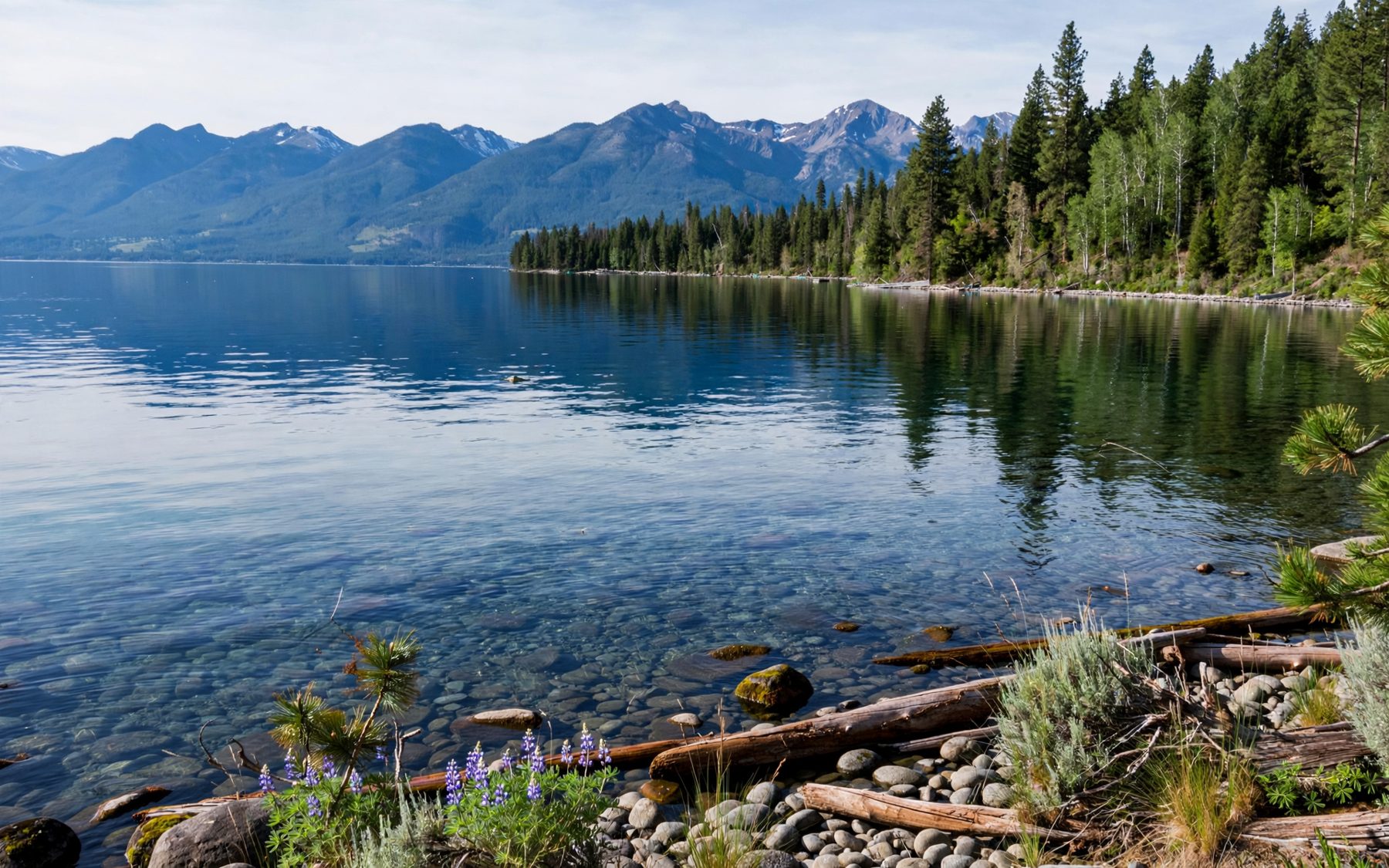
Flathead Lake is big enough to make its own weather. It is close to thirty miles long and up to about fifteen wide, and it is often described as the largest natural freshwater lake by surface area west of the Mississippi in the lower forty-eight states. Look down from a dock in any bay and you see something rarer than size: water so clear that stones on the bottom seem close enough to touch, many feet down.
Every story about this lake, from the cherry orchards to the swimming beaches, comes back to the water. This one is about the water itself.
Made by ice
During the last ice age, a great lobe of glacial ice pushed south down the Flathead Valley from Canada, grinding out a deep basin as it went. When the climate warmed and the ice melted back, it left behind a ridge of rock and gravel at its southern edge, a terminal moraine. Water filled the basin behind that ridge, and Flathead Lake was born. The low hills around Polson at the foot of the lake are part of that moraine, and the river leaves the lake by cutting through it.
The rivers feeding the lake still drain glacier country. The Flathead River gathers water from the mountains of Glacier National Park and the ranges around it; the Swan River comes in at Bigfork from the south-east. Most of that water starts as snow.
Deep, wide and clear
At its deepest the lake reaches more than three hundred and fifty feet, far deeper than any swimmer will ever think about. Its clarity comes from what is not in the water. The mountains around it are made of old, hard rock, the land is largely forest, and the rivers bring in few of the nutrients that feed algae. Low nutrients mean few algae, and few algae mean clear water.
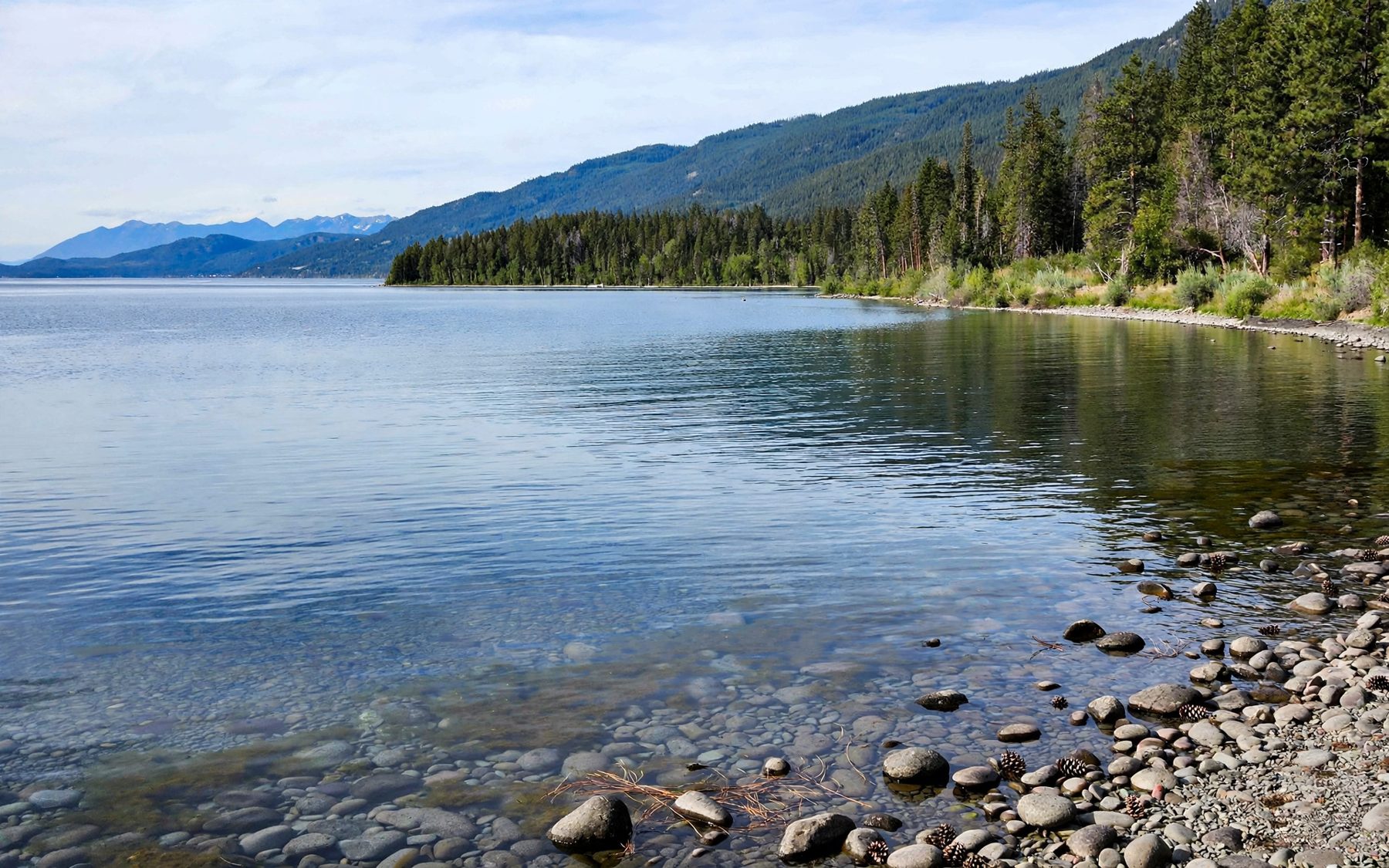
That clarity is not guaranteed. Runoff from roads, septic systems, farms and new building around the shore all add nutrients over time, and scientists watch the lake closely for signs of change. Keeping the water clean is a shared job for everyone who lives on it or visits it.
The cold under the surface
In summer the sun warms the top layer of the lake, and by late July and August the surface in sheltered bays can feel pleasant on a hot afternoon. A few feet down, the temperature drops sharply. The deep water stays close to forty degrees Fahrenheit all year round, and wind can mix colder water up towards the surface without warning. In spring and early summer, the whole lake is cold.
Cold water is the main danger here, more than depth. A sudden plunge into it takes your breath, and in open water your strength fades much faster than you expect. Swim close to shore, wear a life jacket on any boat or board, and get out before you start to shiver.
A station on Yellow Bay
On the east shore, at Yellow Bay, the University of Montana runs the Flathead Lake Biological Station, founded in 1899 and one of the oldest freshwater research stations in the country. Its scientists have measured the lake's water, plankton and fish for decades, building one of the longest records of any large lake in the West. Much of what is known about how clear the lake is, and how it has changed, comes from that work.
2Big ArmPaddling the west shore from Big ArmThe station is a working research site rather than a visitor attraction, though it has opened to the public at times. If you want to visit, check first what is open. The bay itself, with the orchards above and a small state park unit nearby, is a quiet stop on the road between Finley Point and Bigfork.
The shrimp that changed the fish
The lake's fish tell a story about how easily a system can be upset. From the late 1960s, tiny freshwater shrimp called mysis were released into several lakes upstream, in the hope of feeding kokanee salmon, a popular sport fish. The shrimp drifted downstream and reached Flathead Lake in the early 1980s, where their numbers exploded.
The plan backfired. The shrimp hide in deep, dark water by day and rise to feed at night, so the kokanee rarely caught them, while the shrimp ate the small animal plankton the kokanee depended on. Within a few years the kokanee had all but vanished. The bald eagles that once gathered in great numbers to feed on spawning kokanee in Glacier dispersed. Lake trout, deep-water hunters that thrived on the shrimp, multiplied, and native bull trout and westslope cutthroat trout came under pressure.
Today the Confederated Salish and Kootenai Tribes and the state manage the fishery and work to reduce lake trout numbers to help the native fish. Fishing in the southern half of the lake, within the reservation, needs a tribal permit; the northern half follows state rules.

Keeping mussels out
The next threat is one the lake does not have yet. Zebra and quagga mussels have spread through many western waters, clogging pipes, coating shorelines with sharp shells and upsetting food webs. In the mid-2010s mussel larvae were found in reservoirs in other parts of Montana, and the state stepped up its defences. Inspection stations now operate on roads into the state and across the region, and watercraft must stop at open stations, including many non-motorised boats. The rules are reviewed often, so check what applies before you travel.
The habit is simple: clean, drain and dry every boat, board and piece of gear between waters. Paddlers launching from Big Arm on the west shore and boaters at the Polson waterfront alike are part of keeping one of the cleanest large lakes in the country the way it is.