A Flathead cherry morning, stand to stand
For a few weeks each summer the east shore of Flathead Lake turns into cherry country. Drive Highway 35 early, stop where the boxes are fresh, and learn why the lake makes it possible.
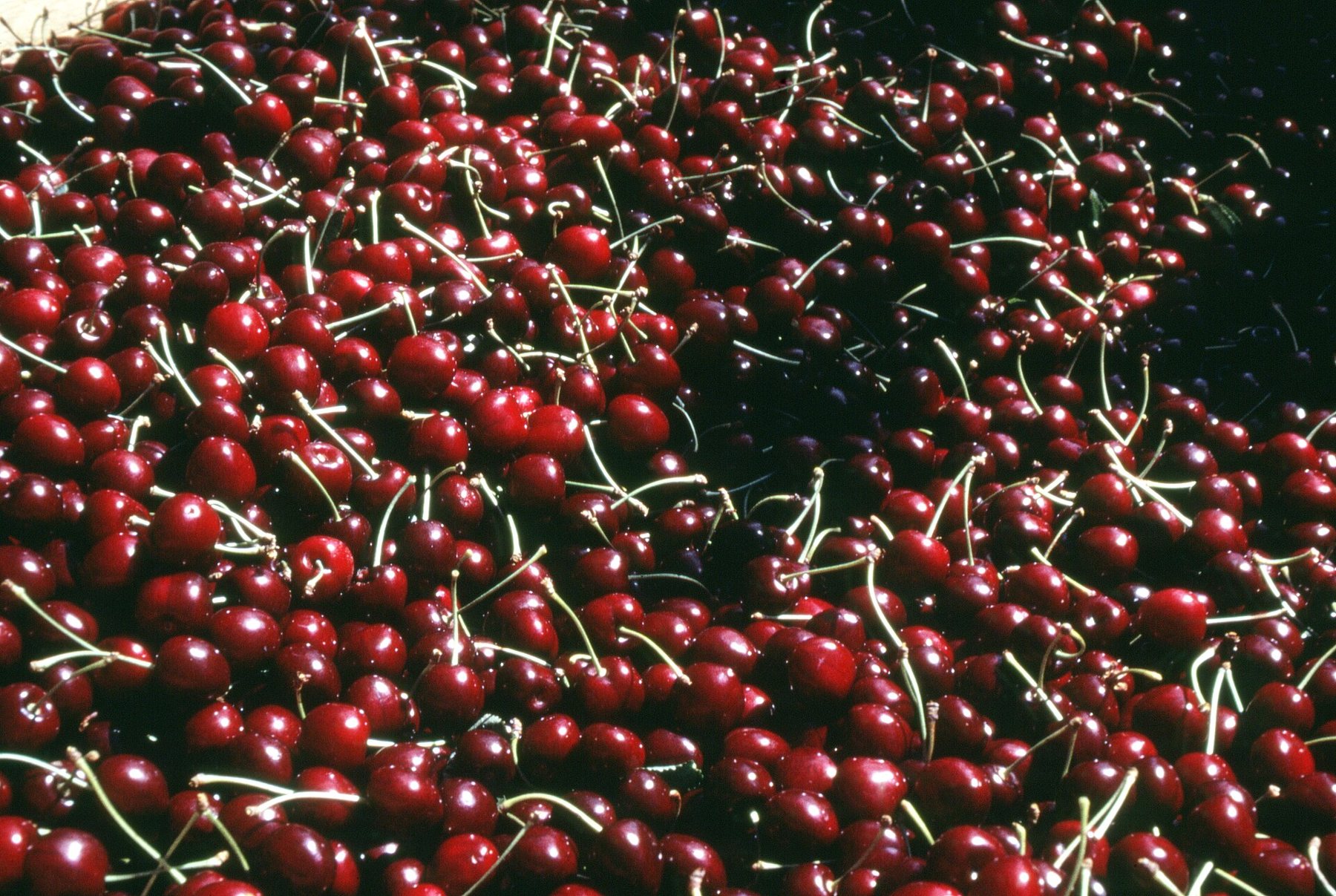
lens
USDA NRCS · Public domain

Montana is not a place you expect to find sweet cherries. Winters are long, spring frosts are common, and much of the state is far too cold for fruit trees that bloom early and ripen in summer. Yet along the east shore of Flathead Lake, between Polson and Bigfork, the hillsides above the water are lined with orchards, and for a few weeks each summer the roadside fills with stands selling dark cherries by the box.
The cherries are a product of the lake itself. Spend a morning driving the shore from stand to stand and you taste the result, but it is worth knowing how it works, and how to behave in someone else's orchard country.
Why cherries grow on this shore
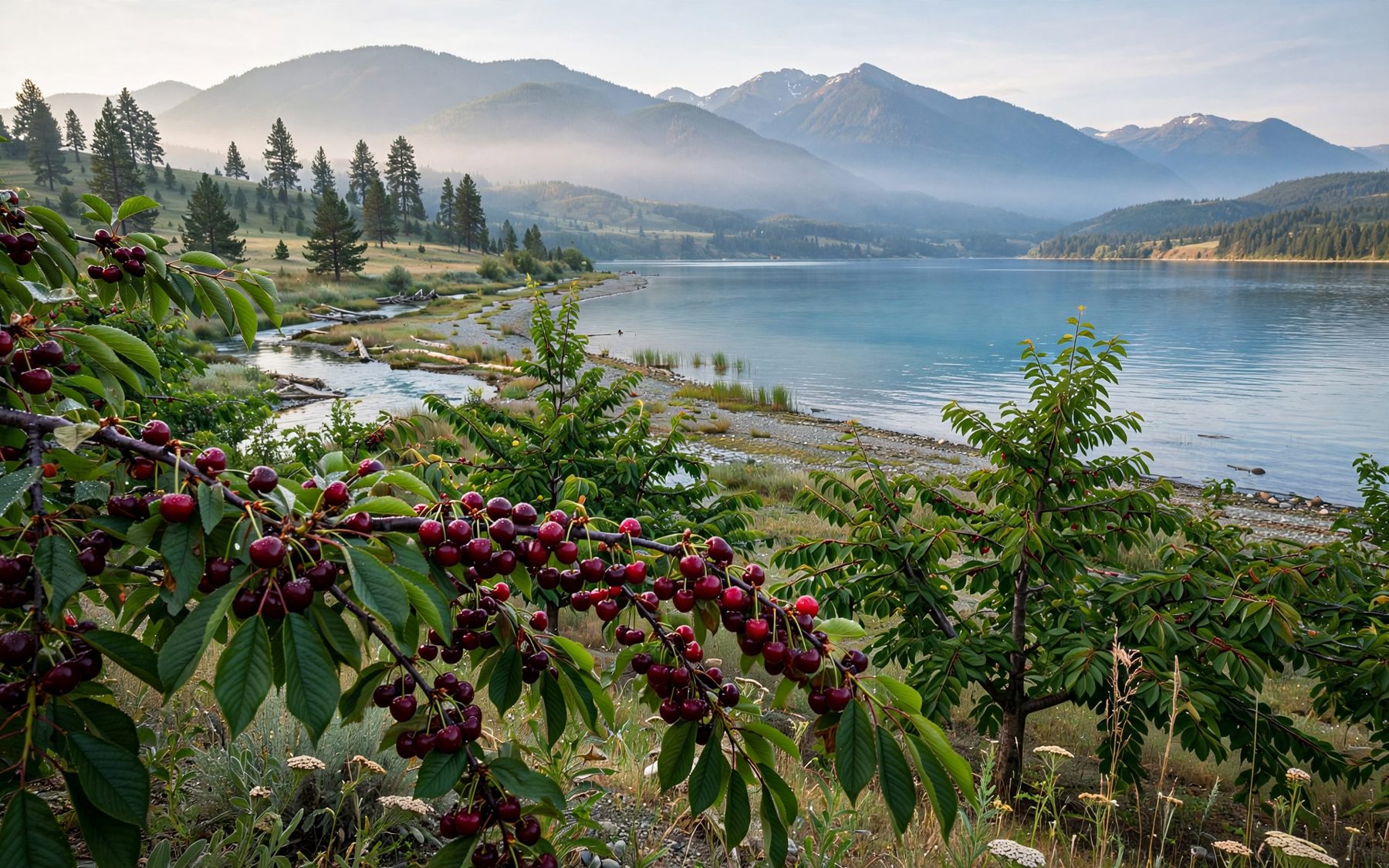
Flathead Lake is huge and deep, and that much water changes the climate around it. In spring the lake is still cold from winter, which keeps the air along the shore cool and holds the trees back from blooming too early, before the danger of a hard frost has passed. In autumn the water releases the warmth it gathered in summer, lengthening the growing season and softening the first cold snaps. Winters along the shore are a little milder than in the valley around.
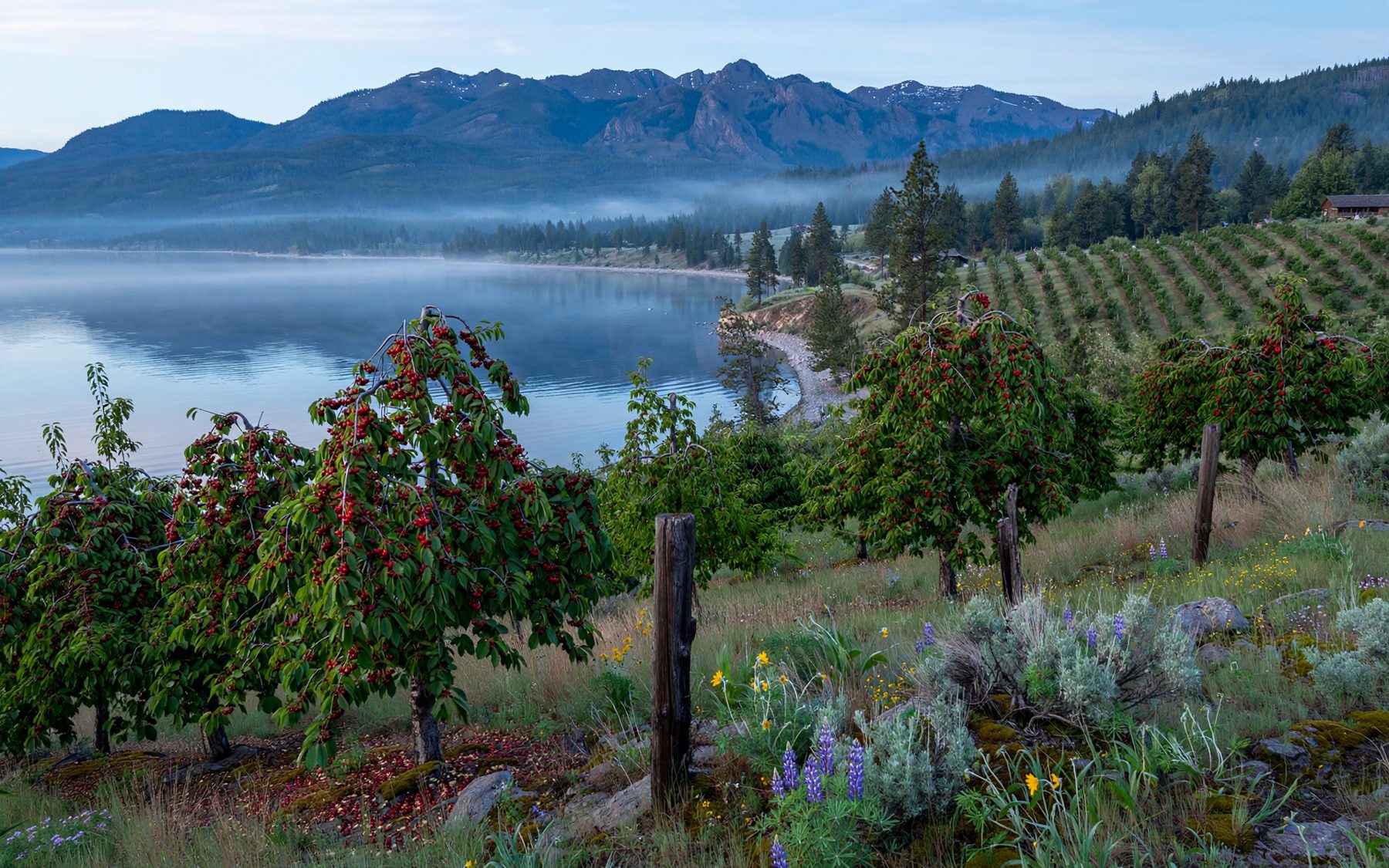
The east shore adds its own advantages. The orchards sit on benches and slopes above the water, where cold air drains downhill on still nights instead of pooling around the trees. The slopes face west and south-west towards the afternoon sun, and the long days of a northern summer ripen the fruit slowly. Put together, the lake and the land make a narrow band where sweet cherries can grow this far north and this far inland.
Cherries have been grown here for roughly a century. Many orchards are family-run, often small, and the work of a year comes down to a few weeks of picking at the end.
Lamberts, Rainiers and the rest
The cherry most closely tied to the lake is the Lambert, a dark red, heart-shaped sweet cherry, firm and rich, that was the backbone of the orchards for generations. Many growers now also raise newer dark sweet varieties alongside it, which ripen a little earlier or later and stand up better to rain, but at a stand you will still often see Lamberts named on the sign.
The other cherry you will meet is the Rainier, yellow with a red or pink blush, very sweet and thin-skinned. It bruises easily and is usually handled with more care, and often sold at a higher price. Taste both if you can.
- Dark sweet cherries: look for firm, glossy fruit with green, flexible stems. Dull skins and brown stems mean older fruit.
- Rainiers: expect a few marks on the skin, which come with the variety, but avoid soft spots.
- Pie cherries: tart cherries turn up at some stands too, for cooking rather than eating from the bag.
A morning on Highway 35
The east-shore road, Montana Highway 35, follows the lake from Polson up past Finley Point, Yellow Bay and Woods Bay to Bigfork. Through the orchard country it runs along the slope between the trees and the water, and in season stands appear at farm gates and pull-outs along the way, some no more than a table and a canopy. Supplies change through the day, and the best fruit is usually out in the morning.
Start early from Polson and work north, or the other way from Bigfork. Stop where the boxes look freshest, buy a little at a few places rather than a lot at the first, and compare. By late morning the sun is hot, the road is busy and the cherries are better off in your cooler than on your back seat.
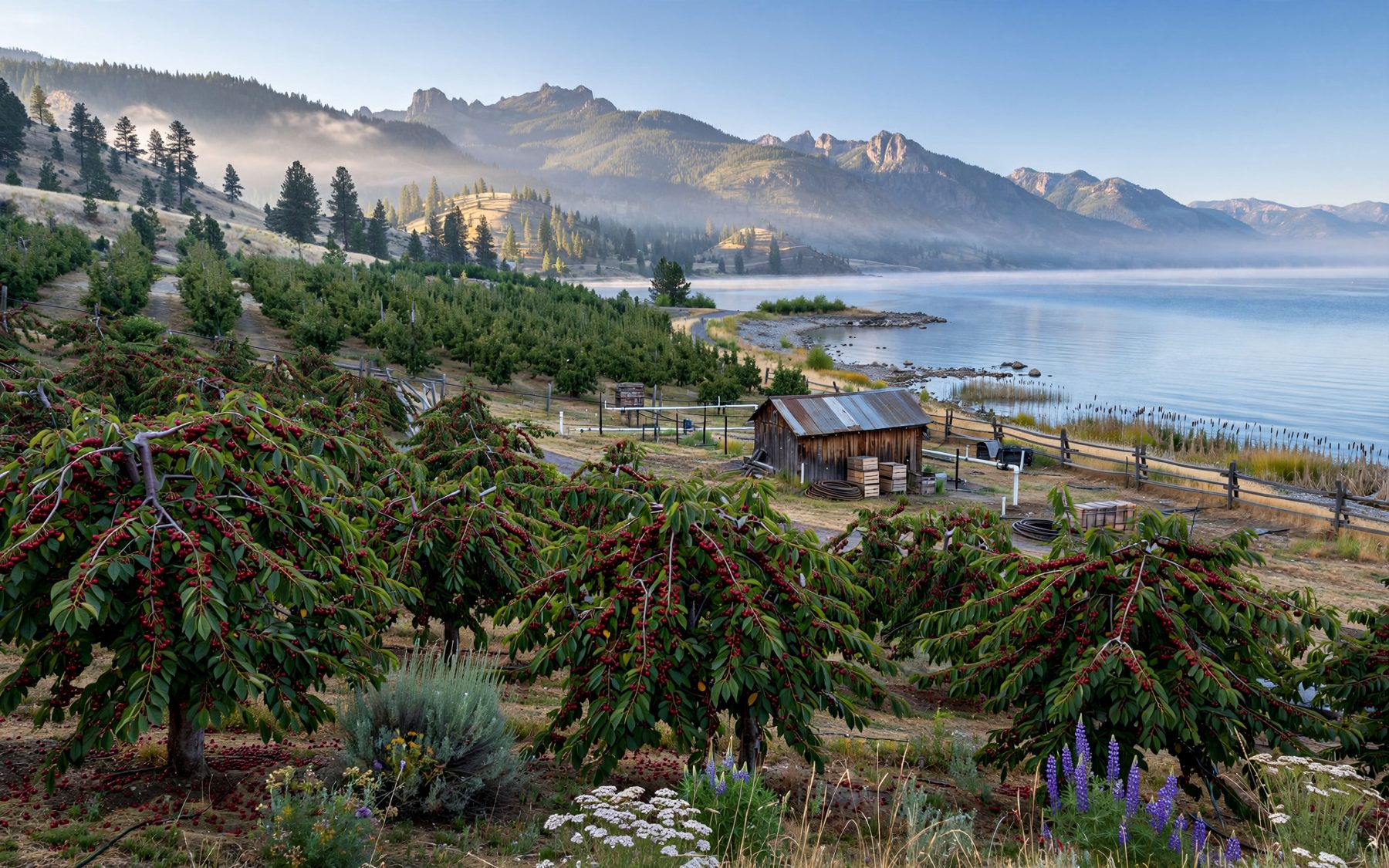
The highway itself needs care. It is narrow and winding, with few shoulders and many hidden driveways, and in cherry season the traffic is heavy. Pull fully off the road to stop, never brake suddenly for a stand on a blind bend, and watch for people crossing on foot.
7Yellow Bay and the orchardsHow cold, how clear: the water of Flathead LakeAt the stand and in the rows
Some orchards open to people who want to pick their own fruit, and a few invite you in only at set times. Where picking is allowed, it is a privilege granted on private land, and a few manners keep it going.
- Pick only where you are invited and only in the rows you are shown.
- Take the cherry with its stem, lifting and twisting it gently. Do not tear off the short woody spur it grows from: next year's fruit grows there.
- Do not climb the trees or bend the branches down; use the ladders provided if there are any.
- Pay before you leave, as the stand or grower asks. Cash is handy, as not every stand takes cards.
- Take your rubbish with you, pits included.
Cherries keep best cold and dry. Get them into a cooler or a fridge quickly, leave them unwashed until you eat them, and they will last much longer than a warm bag on a dashboard.
Cherries keep best cold and dry.
Frost, rain and a short season
Every crop on this shore is a gamble. A late frost at bloom can thin the fruit; a rainstorm just before harvest can make ripe cherries swell and split; a hard, early winter can damage the trees themselves. Some years are generous and some are lean, and the timing of the harvest moves with the weather. Roughly, the season runs from late July to mid-August, with dark varieties and Rainiers coming on at slightly different times.
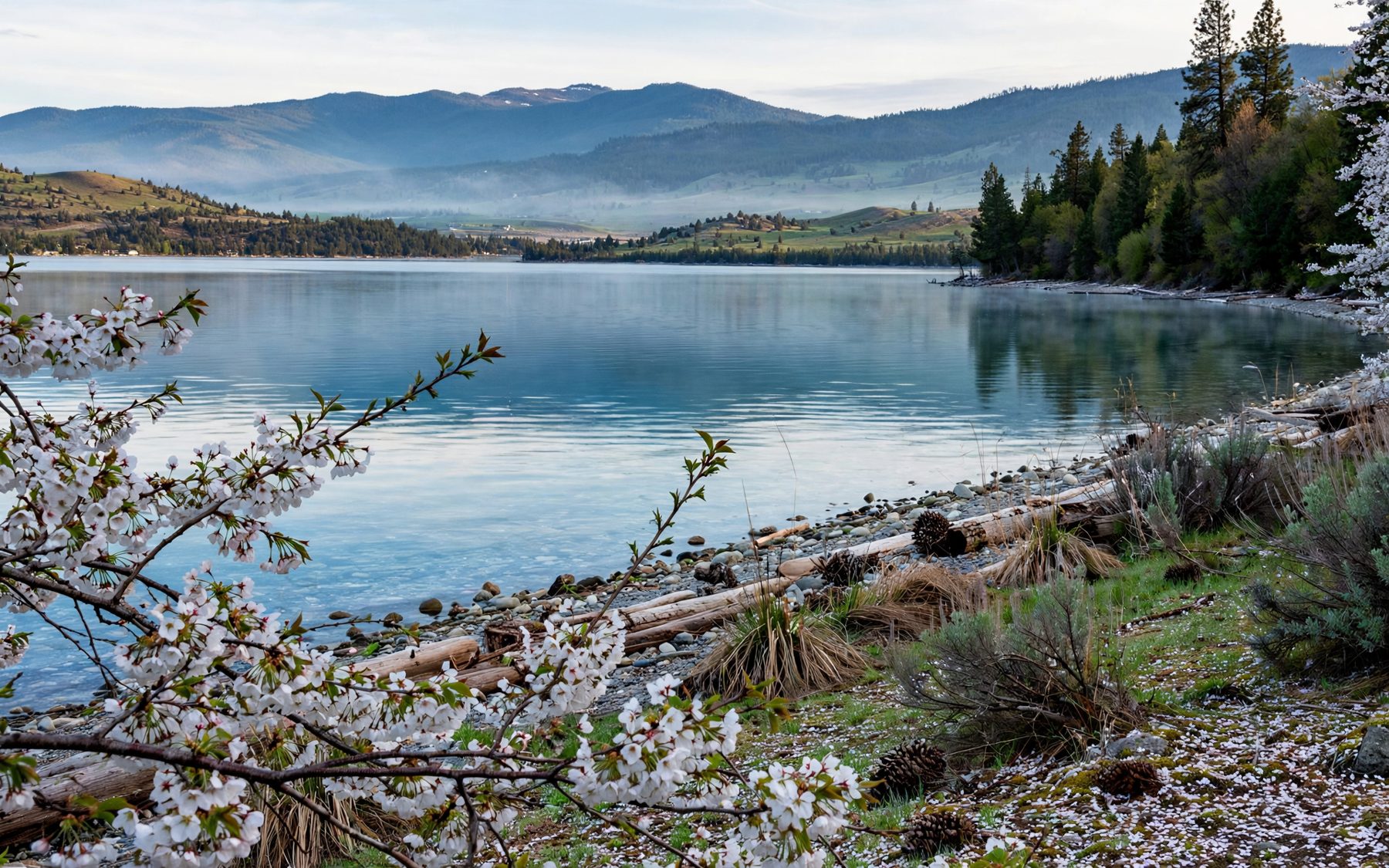
Because of that, no date is ever certain. If you are planning a trip around cherries, check the season as it develops and keep your plans loose. In spring the orchards put on their other show, when the trees blossom white above the blue water; the timing depends on the year.
After the cherries
A cherry morning leaves the afternoon free for the lake. The small state park at the tip of Finley Point is a few minutes south of the orchards for a swim and a sunset, and the Polson waterfront is a good place to finish if you began at the north end. Polson also holds a cherry festival in summer; dates vary, so check ahead. To understand why the lake can grow fruit at all, the story of how cold and clear Flathead Lake is fills in the science. Going north instead, Bigfork and the Swan River wait at the end of the road.