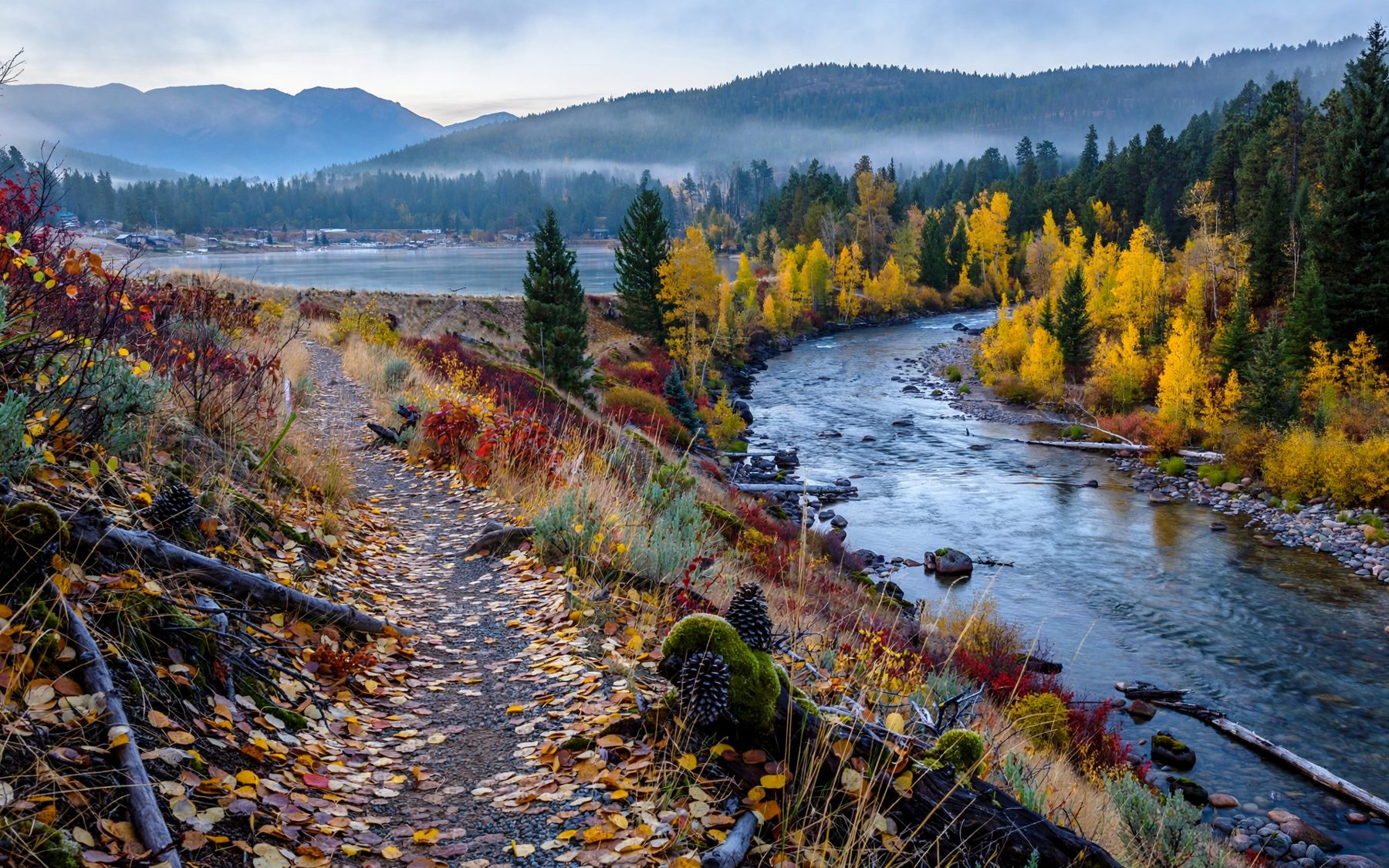
The Swan River trail on a fall morning
At Bigfork the Swan River makes its last loud run to Flathead Lake. Walk the old riverside road at dawn in October, when cottonwoods burn yellow and mist lifts off the rapids.
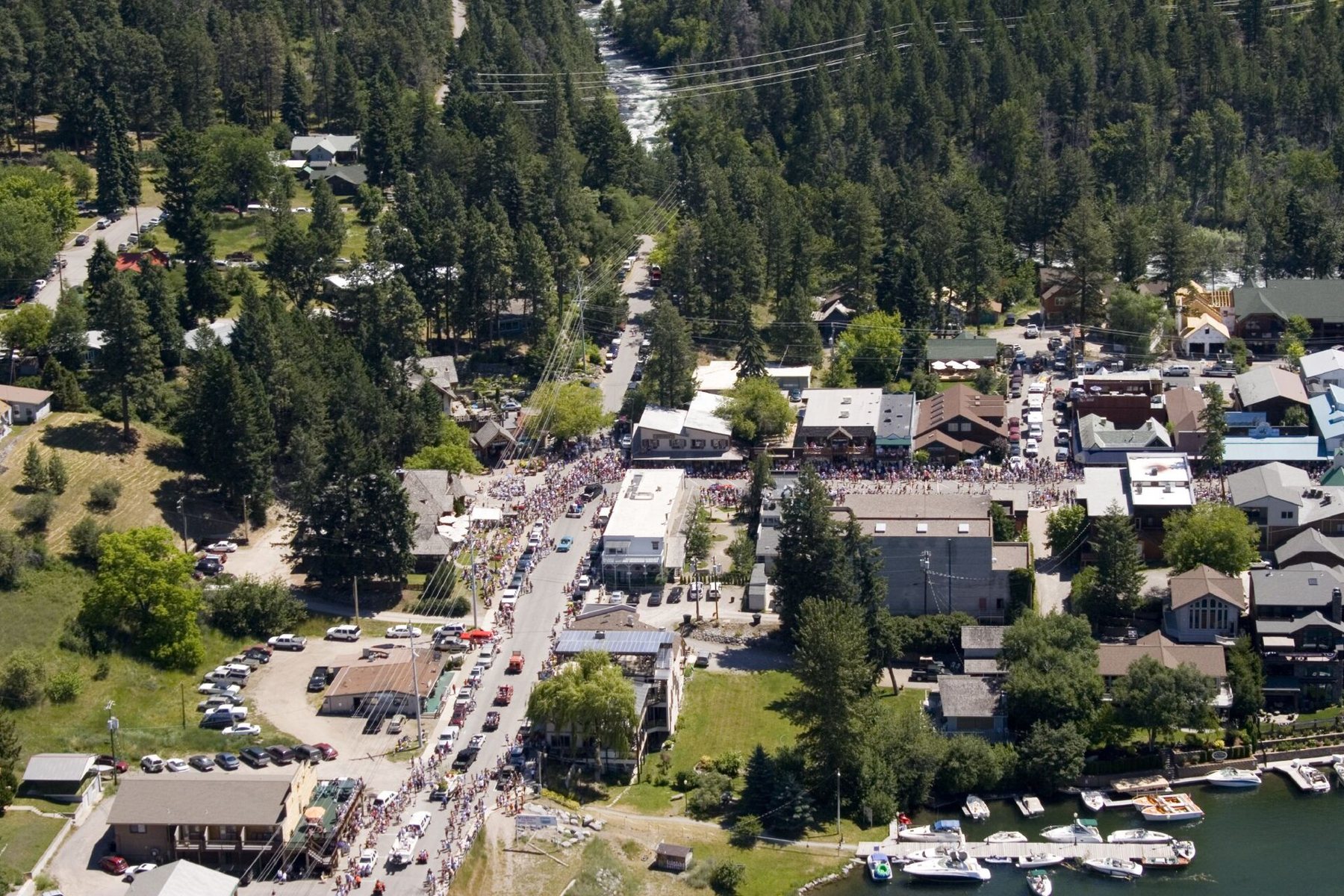
lens
Katie Brady from Missoula, Montana, United States · CC BY-SA 2.0
The Swan River spends most of its life in a long, quiet valley between two mountain ranges. Then, in its last mile, it changes character completely. It drops through a small power dam above Bigfork, crashes down a steep, rocky channel and slides out into Bigfork Bay at the north-east corner of Flathead Lake. The village grew up on the hill above that meeting of river and lake, and the best way to understand it is on foot, early, on a cold autumn morning.
In summer Bigfork is one of the busiest places on the lake, its streets full and its bay crowded with boats. Come in late September or October and the pace slows. The river is lower and clearer, the cottonwoods along its banks turn gold, frost silvers the grass at dawn and the trail beside the water belongs mostly to walkers and dogs.
Where the Swan meets the lake
The Swan rises far to the south, in the high country between the Swan Range and the Mission Mountains. It runs north through a valley of forest, meadow and small lakes, passes through Swan Lake, and turns west towards Flathead Lake. Its water is clear and cold, fed by snow on both ranges.
The dam at the edge of the village was built in the early twentieth century to supply power, and it still holds back a small reservoir on the river above town. Below it the gradient steepens sharply. In a short distance the river falls through boulder gardens and ledges, and by the time it passes under the road bridge into the bay it has lost most of its energy. Stand on the bridge for a minute and you hear the change: the roar upstream, the hush of the bay below.
Bigfork lies north of the reservation boundary, in Flathead County. The east-shore highway from Polson runs up through the orchard country to reach it, with the Swan Range rising behind the whole way.
Walking the nature trail
The Swan River Nature Trail follows an old road along the river upstream from the edge of the village. It is closed to cars, gently graded and wide enough to walk two abreast, and it runs through mixed forest of pine, fir, birch and cottonwood with the river close by on one side and the hillside on the other. It goes out and back, so you can turn around whenever you have had enough; a couple of hours covers the whole thing at an easy pace.
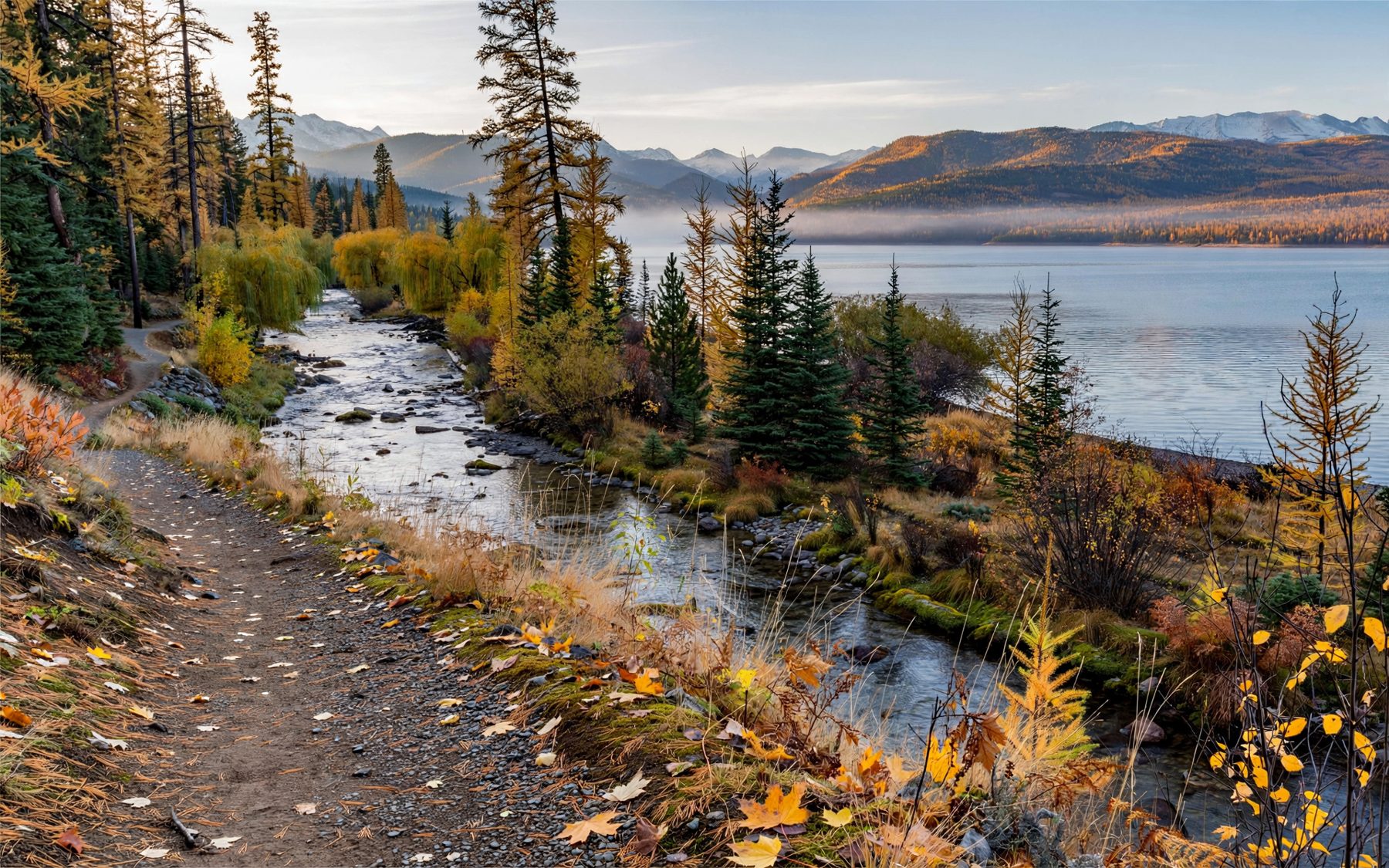
The trail is good in every season, but autumn suits it best. The low sun comes through the trees at a slant, the leaves underfoot are dry and loud, and on still mornings mist rises off the river where the cold air meets the warmer water. Look for American dippers, small grey birds that bob on rocks in the rapids and walk underwater to feed, and for ducks resting in the eddies. Deer cross the trail at dawn. This is also bear country, so carry bear spray here as you would anywhere in the hills around the lake.
- Start early: the light on the water is best in the first hour of sun.
- Dress for frost: October mornings can start below freezing even after warm afternoons.
- Keep to the trail: the banks are steep and undercut in places, and the current is strong.
- Share the way: runners, cyclists and dog walkers use it too; keep dogs under control.
The Wild Mile
The steep stretch below the dam is known as the Wild Mile, and in spring it lives up to its name. When snowmelt swells the river in May and June, the channel becomes a run of big waves and holes that draws expert kayakers from across the region, and a whitewater event has been held on it in spring for many years. Even at autumn flows the water is fast and rocky.
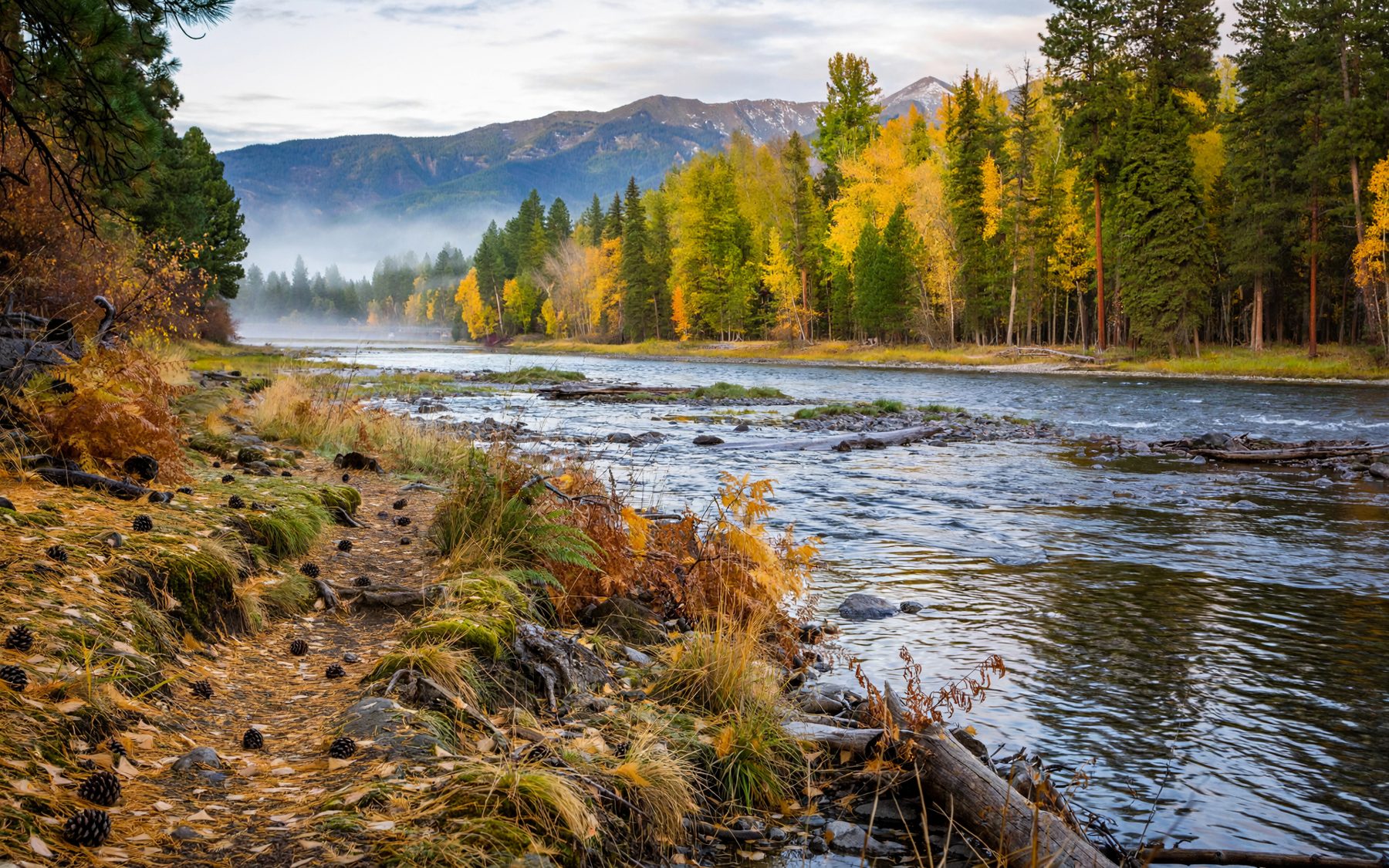
It is a stretch to watch, not to swim or wade. Viewpoints along the trail and near the bridge let you see the rapids safely. If you want to get on the water yourself, the bay below and the lake beyond are the places for it, and any boat you bring is subject to Montana's aquatic invasive species inspections first.
8Finley PointSunset swims at Finley PointAutumn colour along the water
The colour comes in stages. Cottonwoods and birch along the river turn first, from late September, in yellows that glow against the dark conifers. Aspen on the drier slopes follow. Then, usually in October, the western larch on the mountainsides turns gold, a conifer that loses its needles each year and lights up whole hillsides of the Swan Range for a few weeks before the snow.
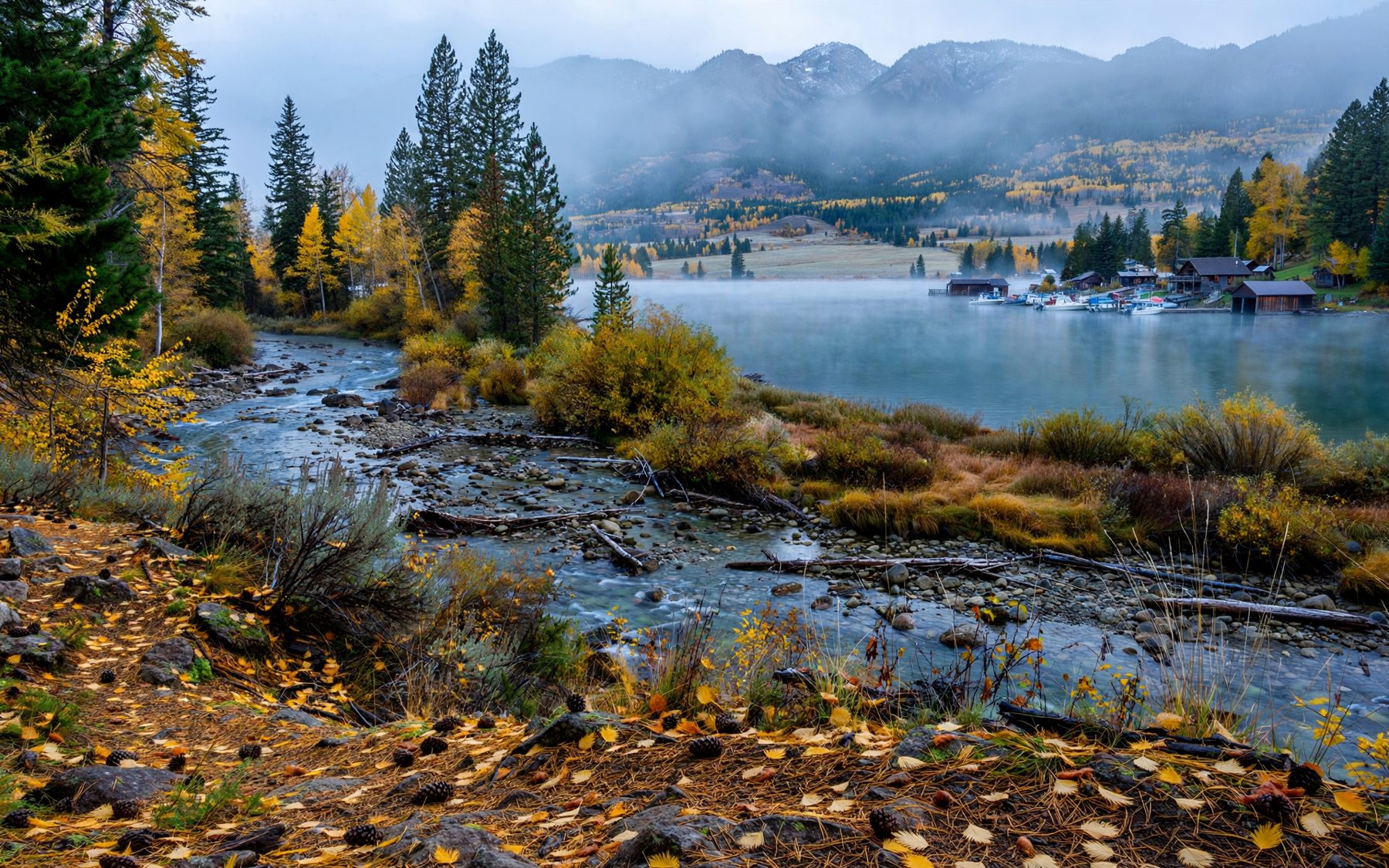
The finest show on a fall morning is often at the bay itself, where yellow trees, dark water and the white of early snow on the peaks behind the village come together in one view. On calm days the whole scene sits reflected in the water. A fresh dusting on the mountains after a cold night is worth getting up early for.
A fresh dusting on the mountains after a cold night is worth getting up early for.
The village above the bay
Bigfork itself is small and easy to walk. The main street, Electric Avenue, curves along the hillside above the bay with galleries, shops and places to eat in older wooden buildings, and side lanes drop down to the water. In summer it is lively until late; in autumn many businesses keep shorter hours or close for the season, and the village takes on a quieter, local feel. Parking is tight in high season, easy in October.
The bay is the village's front yard. Docks line its edge and sailboats and motorboats come and go from spring to autumn. From the shore you look west across the open lake, and on a clear evening the sun goes down over the hills of the far shore. Water in the bay is cold, and the boat traffic makes it a poor place for a swim; the public beaches further around the lake are better for that.
A slow morning, start to finish
- Reach Bigfork at first light and walk onto the road bridge to see the river meet the bay.
- Walk the nature trail upstream, stopping at the rapids, and turn back when the sun clears the trees.
- Warm up in the village and wander Electric Avenue and the lanes down to the water.
- Drive south along the east shore through the orchard country, where the cherry stands of summer are shut for the year but the orchard leaves turn colour too, or north towards the north-shore wetlands at Somers to watch waterfowl gathering on the lake.
If you have legs for more, the hiking area of Jewel Basin rises in the mountains behind the village, though by mid-October its trails may already be under snow. Whatever you choose, give the river the first hour of the day. It is never louder, clearer or more beautiful than when the frost is still on the trail.