Wild Horse Island: bighorn sheep and a swim
The biggest island in Flathead Lake is a day-use state park you can reach only by boat. Land in a quiet bay, walk the prairie among bighorn sheep, and swim before the wind comes up.
lens
Aneil Lutchman · CC BY-SA 2.0
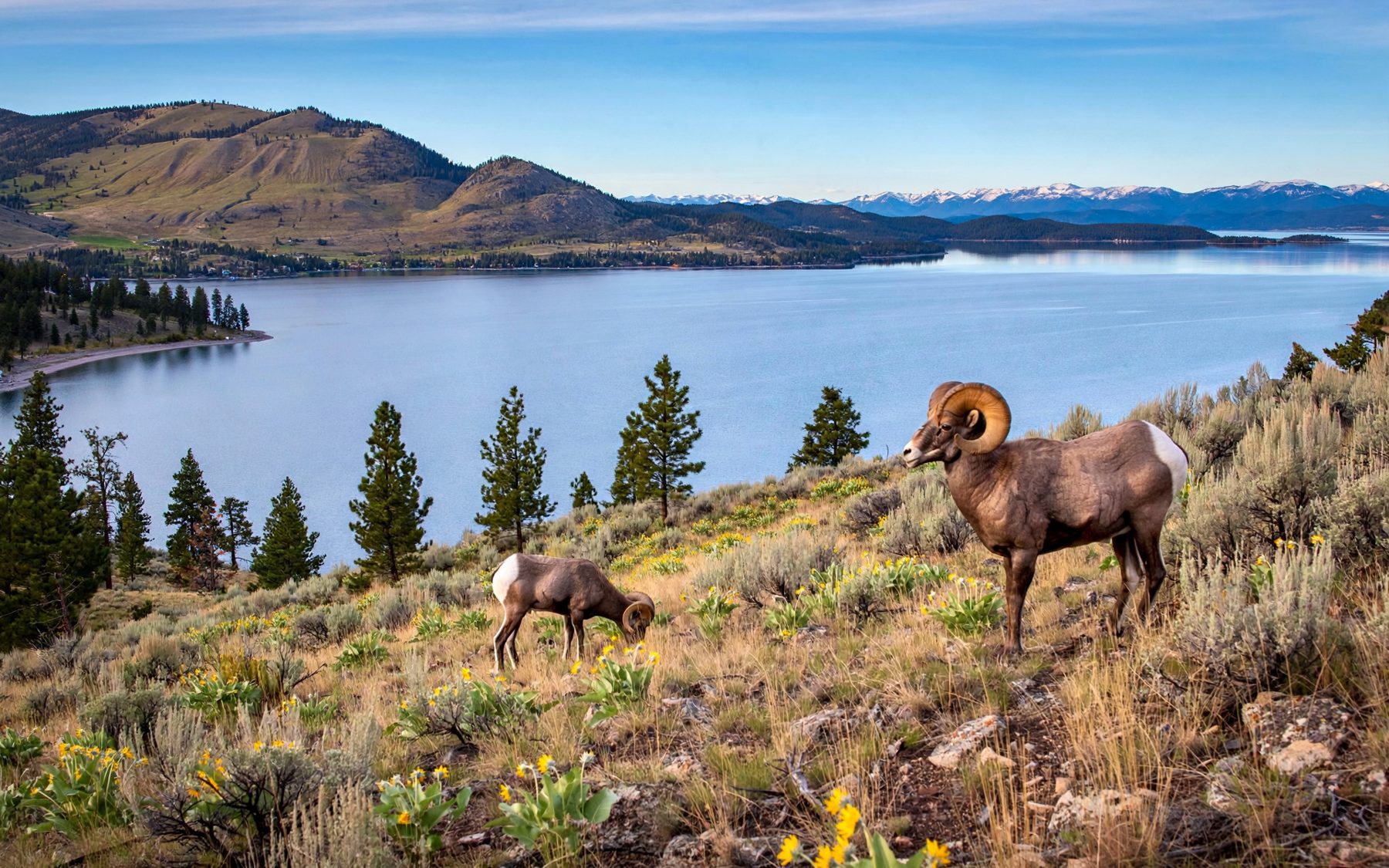
Off the west shore of Flathead Lake, across the bay from Big Arm, a long hump of grass, rock and ponderosa pine rises out of the water. Wild Horse Island is the largest island in the lake, a little over two thousand acres, and most of it is a Montana state park open for day use only. No bridge, no ferry, no road: you get there by boat or not at all.
What waits for you is a piece of the old open country of western Montana. Bighorn sheep graze the slopes, mule deer move through the pines, bald eagles and ospreys hunt the shoreline, and a small band of horses roams the grass that gave the island its name. On a calm summer morning, with the Mission Mountains standing to the south-east and the lake flat around you, it feels very far from the highway on the mainland.
Crossing from the west shore
The usual jumping-off point is the Big Arm area on the west shore, where the state park unit has a boat ramp and a long pebble beach. From there the island lies a short run across open water. In a motorboat it is a matter of minutes; in a kayak or canoe it is a real crossing, a mile or more each way of exposed lake. If you are paddling, the guide to paddling from Big Arm covers the route and the wind in more detail.
The lake is calm most often in the early morning, and the wind usually picks up from late morning onwards. Afternoon waves on the open water between the island and the shore can be steep and close together, enough to swamp a small boat. Cross early, keep an eye on the sky to the south and west, and leave yourself a margin for the trip back. If the water turns rough, waiting on the island for it to settle is often the safer choice.
Every boat launched in Montana, including canoes, kayaks and paddleboards in many cases, is subject to aquatic invasive species inspection. Stop at any open inspection station on your way to the lake and arrive with your craft clean, drained and dry.
Landing and the rules of the island
The island has a handful of designated landing spots on its shore, marked by signs. Use those rather than pulling up anywhere you like: much of the island is park land, but there are also private lots, mostly near the shoreline, and the owners' land and docks are not open to visitors. Signs mark the boundaries. Stay on the park side of them.
- Day use only: no camping and no overnight stays on the park land.
- No fires: the grass dries early and burns fast.
- No pets: dogs and other animals stay on the mainland, for the sake of the wildlife.
- Pack it all out: there is no rubbish collection. Whatever you bring, you take home.
- Leave the animals alone: no feeding, no approaching, no following them for a better photo.
Rules and fees for state parks can change, so check the current details for Flathead Lake State Park before you go. There is little or no water to drink on the island; bring all you need, and more on a hot day.
7Yellow Bay and the orchardsHow cold, how clear: the water of Flathead LakeBighorn sheep, mule deer and the horses
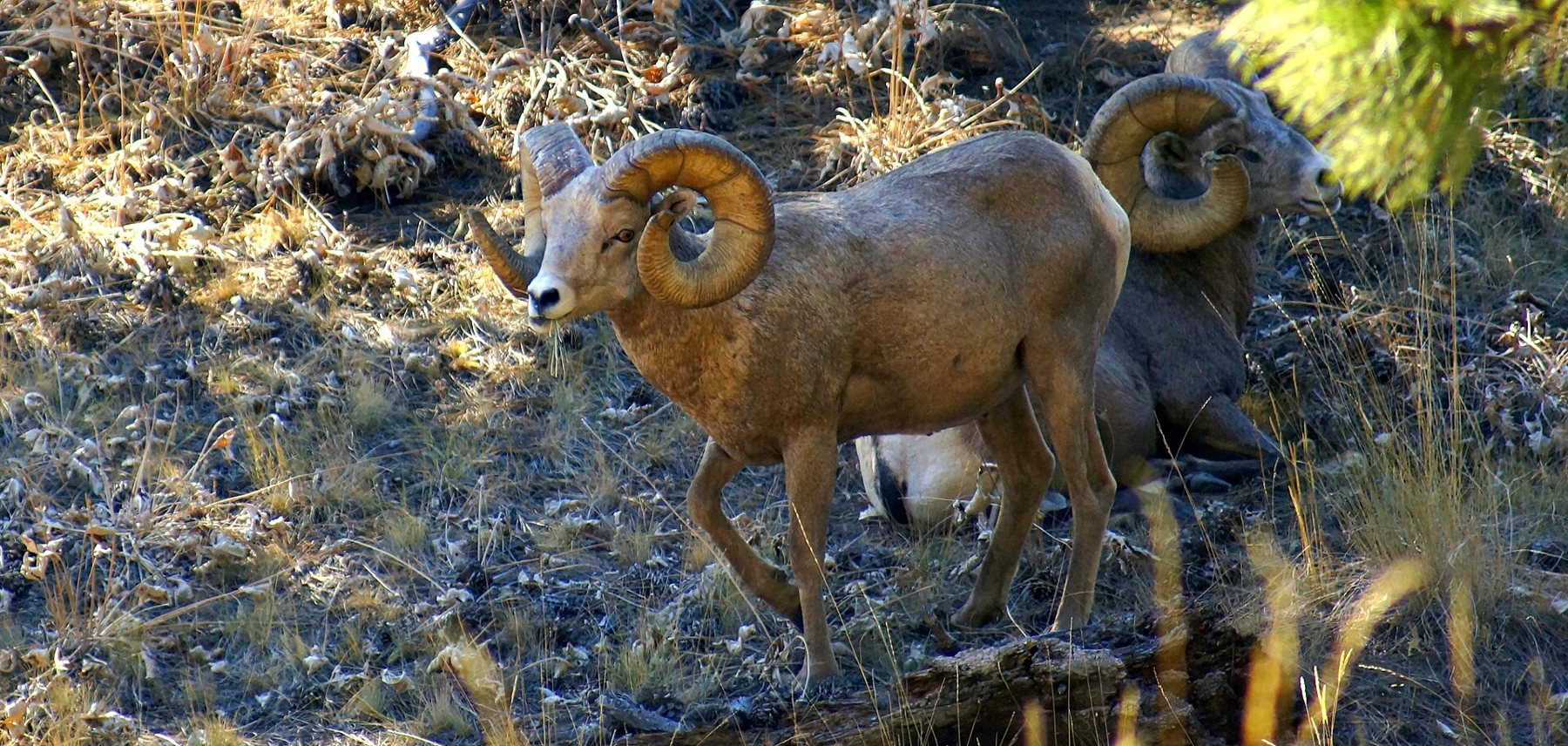
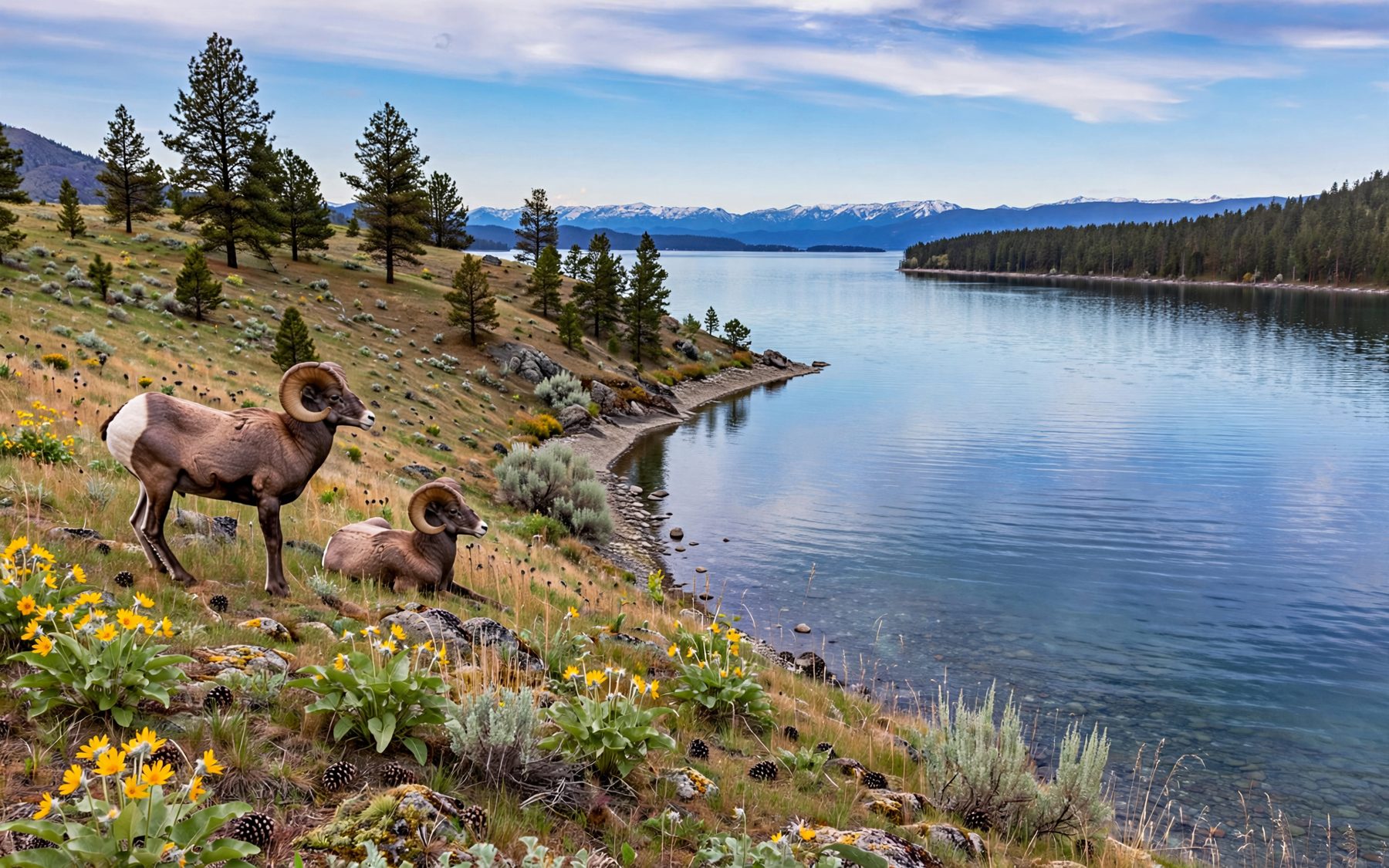
The bighorn sheep are the island's best-known residents. Rams with heavy curled horns and ewes with their lambs graze the open slopes and rest in the shade of the pines, often surprisingly close to the trails. They are wild animals, though, and rams in the autumn rut can be unpredictable. Keep well back, use binoculars, and let them move off on their own terms.
Mule deer are common too, especially in the morning and evening, and you may see them swimming between the island and the shore. Birds of prey are everywhere: bald eagles perched in dead snags, ospreys diving for fish in the bays, and falcons along the cliffs. Songbirds fill the pines in early summer.
The horses are the hardest to find. A small number live on the island, descendants of horses kept there in the past, and they wander widely. The name goes back further. The story most often told is that Salish and Pend d'Oreille people pastured horses on the island to keep them safe from raiders, using the lake as a moat. Whether or not you see a horse, the island is worth the trip for the sheep, the prairie and the views alone.
Prairie, pines and the walk to the top
The island is a surviving patch of Palouse prairie, the native bunchgrass grassland that once covered much of the inland North-west and has been ploughed out almost everywhere else. In late spring and early summer it is full of wildflowers: arrowleaf balsamroot in yellow drifts, lupine, bitterroot on the rocky ground. By August the grass has turned the colour of straw and the slopes smell of warm pine needles.

Simple trails lead from the landing areas up across the grass towards the high ground in the middle of the island. The climb is steady rather than hard, but there is little shade and the sun is strong; walk in the morning if you can. From the higher slopes you look out over almost the whole lake: the open water to the north, the Mission Mountains to the south-east, and the long line of the west shore you crossed from.
Whether or not you see a horse, the island is worth the trip for the sheep, the prairie and the views alone.
Watch your footing on the rocks and keep an eye out for rattlesnakes, which live on the warmer slopes in western Montana. Black bears are rare on the island but not impossible, and bear spray is a habit worth keeping anywhere in this country.
The swim
After the walk, the bays around the landing spots are a fine place to swim, with clean pebble beaches and water so clear you can see the stones far beneath you. Be ready for the cold. Even in August the surface of Flathead Lake is cool and a few feet down it is cold enough to take your breath away. Get in gradually, stay close to shore, and get out before you start to shiver. Do not swim out into open water where boats run; drivers will not expect you.

Many people bring a picnic and spend the middle of the day here, swimming, drying off on the warm stones and watching the boats go past. Keep half an eye on the water further out. When the dark lines of wind start to cross the lake towards you, it is time to pack up and think about the way back.
Planning a day
A good day on the island runs from an early launch to a crossing back by early afternoon. June brings the flowers and long evenings; July and August bring the warmest water and the busiest bays; September is quieter, the light softer and the sheep often easier to find. Outside summer the water is very cold and the weather changeable, and the crossing is for experienced boaters only.
- Clean, drain and dry your boat, and stop at any inspection station on your way.
- Launch from Big Arm early, while the lake is calm.
- Land at a marked landing spot and walk up across the prairie.
- Swim and picnic in the bay.
- Cross back before the afternoon wind, then drive on to the small bays at Elmo and Dayton or south to the Polson waterfront for the evening.
Treat the island as the wild place it is, take everything home with you, and it will be there for the sheep and the next visitors in the same shape you found it.