Somers and the north-shore wetlands
At the northern tip of Flathead Lake, an old mill town looks over a bay where the river comes in. East of it, the north shore opens into marsh, meadow and some of the best birding in the valley.
lens
Chris Light · CC BY-SA 4.0
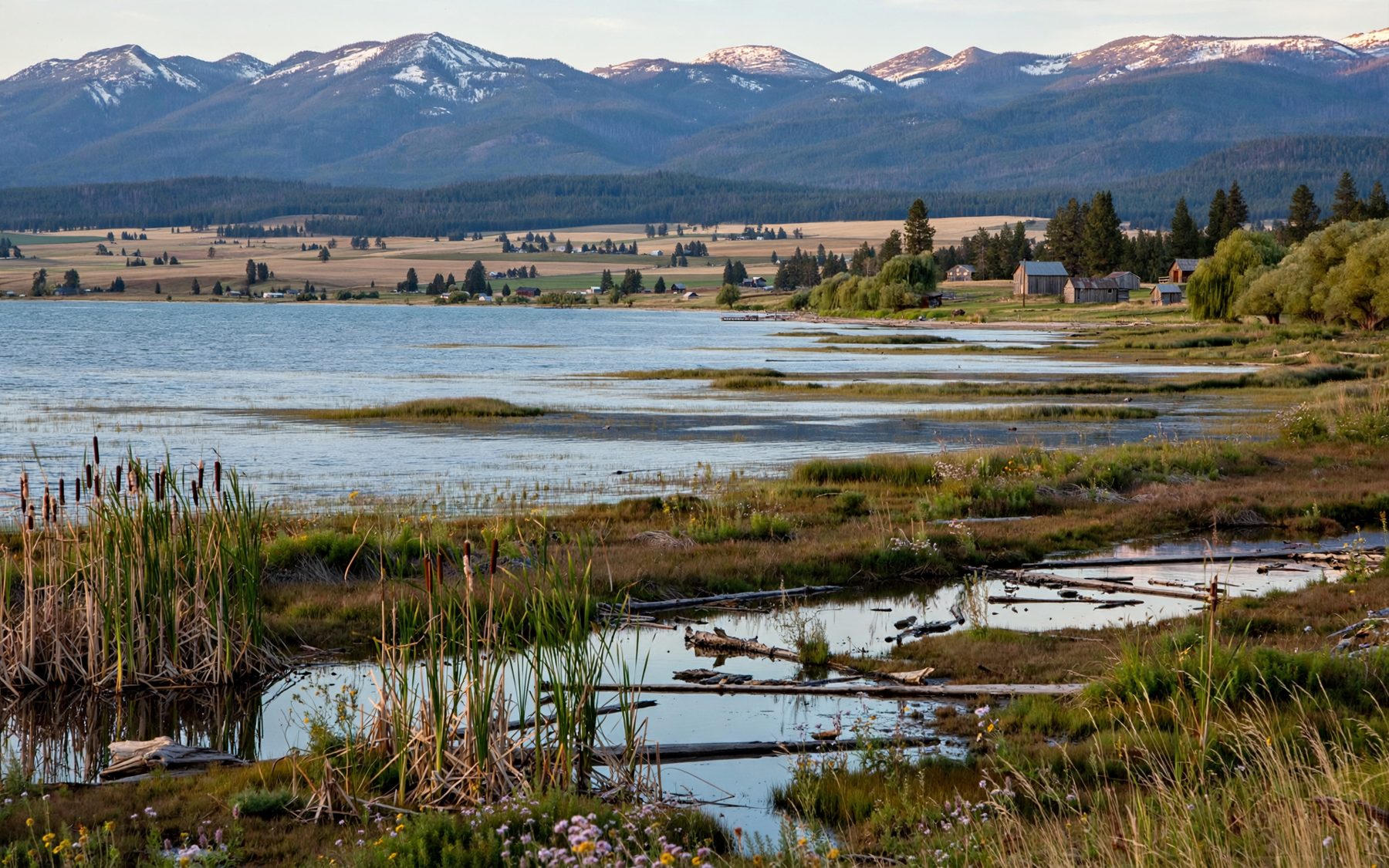
Somers sits at the very top of Flathead Lake, where the west shore curves round to meet the north. From the water's edge you look straight down the length of the lake, nearly thirty miles of it, towards Polson and the Mission Mountains at the far end. Behind you lies the broad, flat Flathead Valley, and a few miles to the east the Flathead River slides into the lake through a delta of marsh, channels and willows.
It is a small place with a working past. For much of the twentieth century Somers was a company town, built around a sawmill and a plant that treated railroad ties, and its bay was the busiest harbour on the lake. Today it is quieter, but the bay, the old town grid and the wetlands to the east make it one of the most interesting corners of the lake to explore.
A town built on ties
Somers was founded at the start of the twentieth century, when the Great Northern Railway needed huge numbers of wooden ties for its tracks across the West. Logs were cut in the forests around the lake and floated down the rivers to the northern shore, where they were sawn and treated with preservative at the plant in Somers. The town grew around the mill, with workers' houses on a simple grid, a store, a school and a busy waterfront.
For years Somers was also a port. Steamboats carried passengers and freight up and down the lake before roads ran along both shores, and logs were rafted across the water in great booms. The mill and tie plant eventually closed in the later twentieth century, and the industrial land along the shore has since changed hands and uses. Walking the older streets near the bay, you can still see the outline of the company town in the modest houses and the straight blocks.
Somers lies north of the reservation boundary, in Flathead County, and it is a short drive from Kalispell and Bigfork.
The bay and the shore
The bay at Somers is wide and fairly shallow, with docks along its edge and a long view south across open water. In summer it fills with boats, and on calm evenings the light on the far mountains is one of the lake's great sights. When the wind blows from the south, which it often does in the afternoon, the full length of the lake sends waves rolling up into the bay; at those times the water here can be rough and grey.
A public beach near Somers on the north shore offers a place to walk the shoreline and look down the lake. Fees, hours and rules can change, so check before you go. The water is cold, as it is everywhere on Flathead, and the north end is shallow and weedy in places. Most people come here to walk and watch rather than swim.
7Yellow Bay and the orchardsHow cold, how clear: the water of Flathead LakeWhere the river comes in
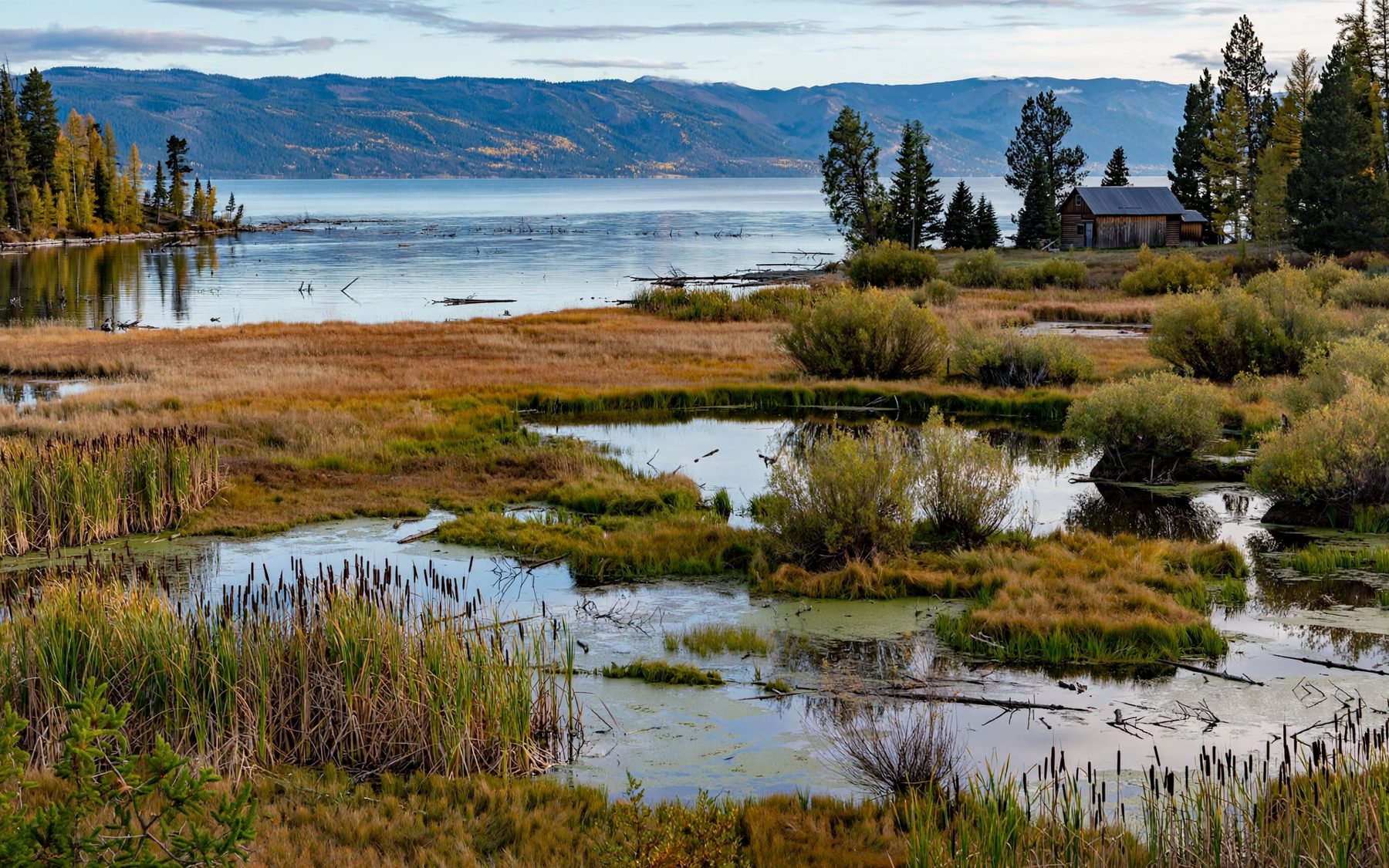
East of Somers, the Flathead River meets the lake. It carries water from the mountains of Glacier National Park and the Canadian Rockies, from the Whitefish Range, from the Swan, and from the vast forests in between. As it slows on reaching the lake it drops its load of silt and sand, building a broad delta of channels, islands, marsh and wet meadow across the north shore.
The lake level, held within a managed range by the dam at the far end of the lake, shapes this shore through the year. In early summer, with the lake full, water reaches deep into the marshes. In winter and early spring, when the level is lower, broad mud flats and sand bars appear, and the river's channels show plainly across them.
The dam where the lake leaves is the other end of the same system.
Much of the delta and the north shore is protected for wildlife, with federal and state lands set aside for nesting and migrating birds. Public access points with small parking areas lead onto parts of it. Some areas close for part of the year to protect nesting birds, and hunting seasons apply in autumn, so read the signs and check the current rules before you walk out.
Birds through the year
The north shore is one of the best places in north-west Montana to watch birds, and the cast changes with the seasons.
| Season | What to look for |
|---|---|
| Spring | Migrating swans, geese and many kinds of ducks resting on the open water and flooded fields; shorebirds on the mud. |
| Early summer | Nesting waterfowl, ospreys on poles and pilings, bald eagles, songbirds in the willows. |
| Late summer | Young ospreys learning to fish, herons in the shallows, swallows over the marsh. |
| Autumn | Waterfowl gathering before the move south, raptors along the shore, big skies over the stubble fields. |
| Winter | Bald eagles near open water, hardy ducks, and a quiet, frozen marsh under snow. |
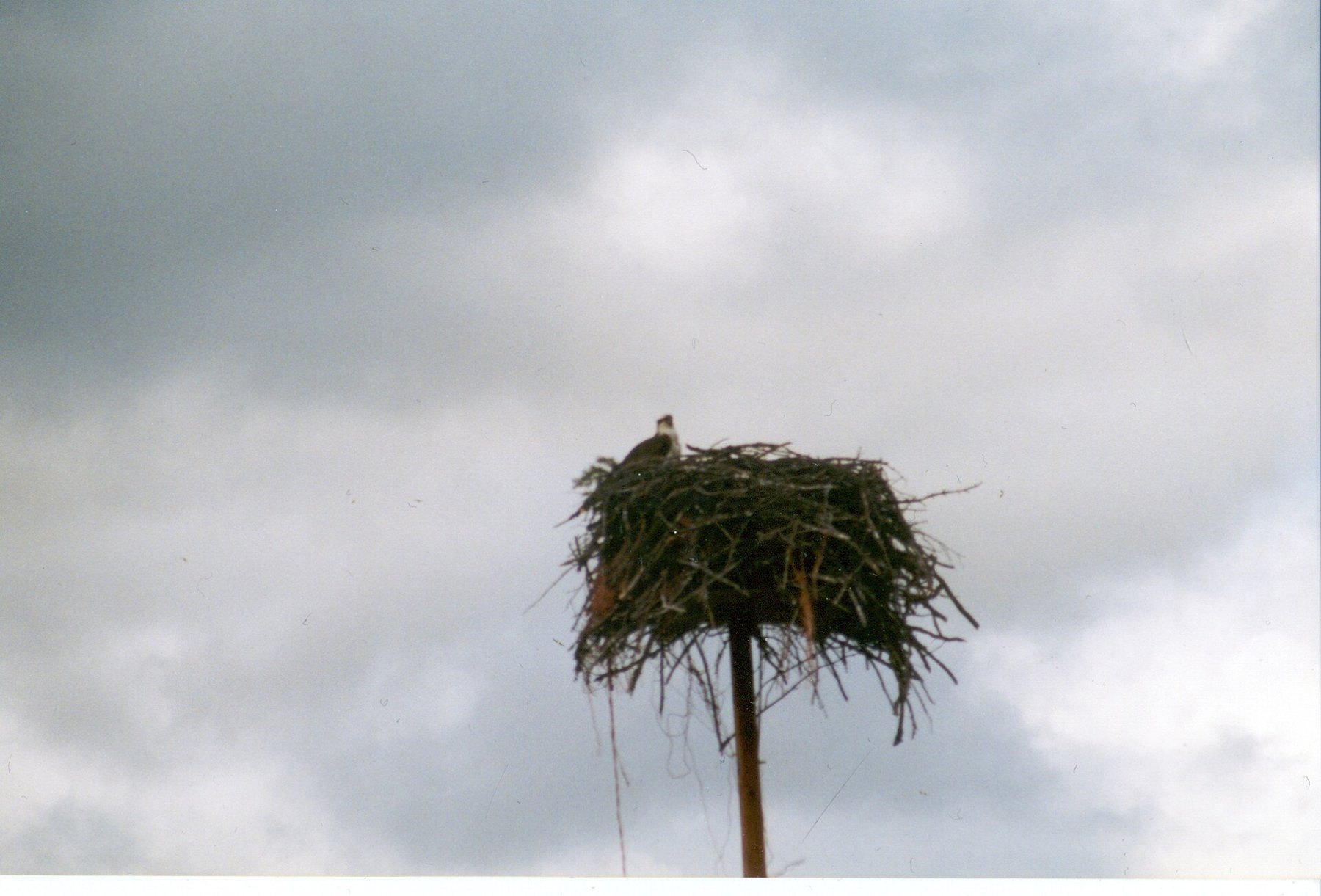
Ospreys are the summer signature of the whole lake, and the north shore has plenty of them. They build bulky nests of sticks on top of poles, pilings and dead trees, and return to the same nests year after year. Watch from a distance: a bird that leaves its nest and circles calling above you is telling you that you are too close.
Bring binoculars, and a spotting scope if you have one; many of the birds are far out on the water. Early morning and evening are the best times, both for the light and for the birds' activity.
A day at the top of the lake
A good north-shore day starts early on the wetlands, when the birds are busiest and the air is still. From there, walk the bay and the old streets of Somers, then drive west to Lakeside and up Blacktail Mountain for the view over the whole lake, or east to Bigfork and the Swan River trail. Spring and autumn are the best seasons for birds, and the quietest on the roads; summer brings the boats and the long, warm evenings on the bay. Whatever the season, bring waterproof boots and warm layers, because the north shore is open to every wind that comes up the lake.