The Bison Range under the Mission Mountains
South of the lake, a range of grassy hills is home to a herd of bison managed by the Confederated Salish and Kootenai Tribes. A steep gravel drive climbs through it, with the Missions on the skyline.
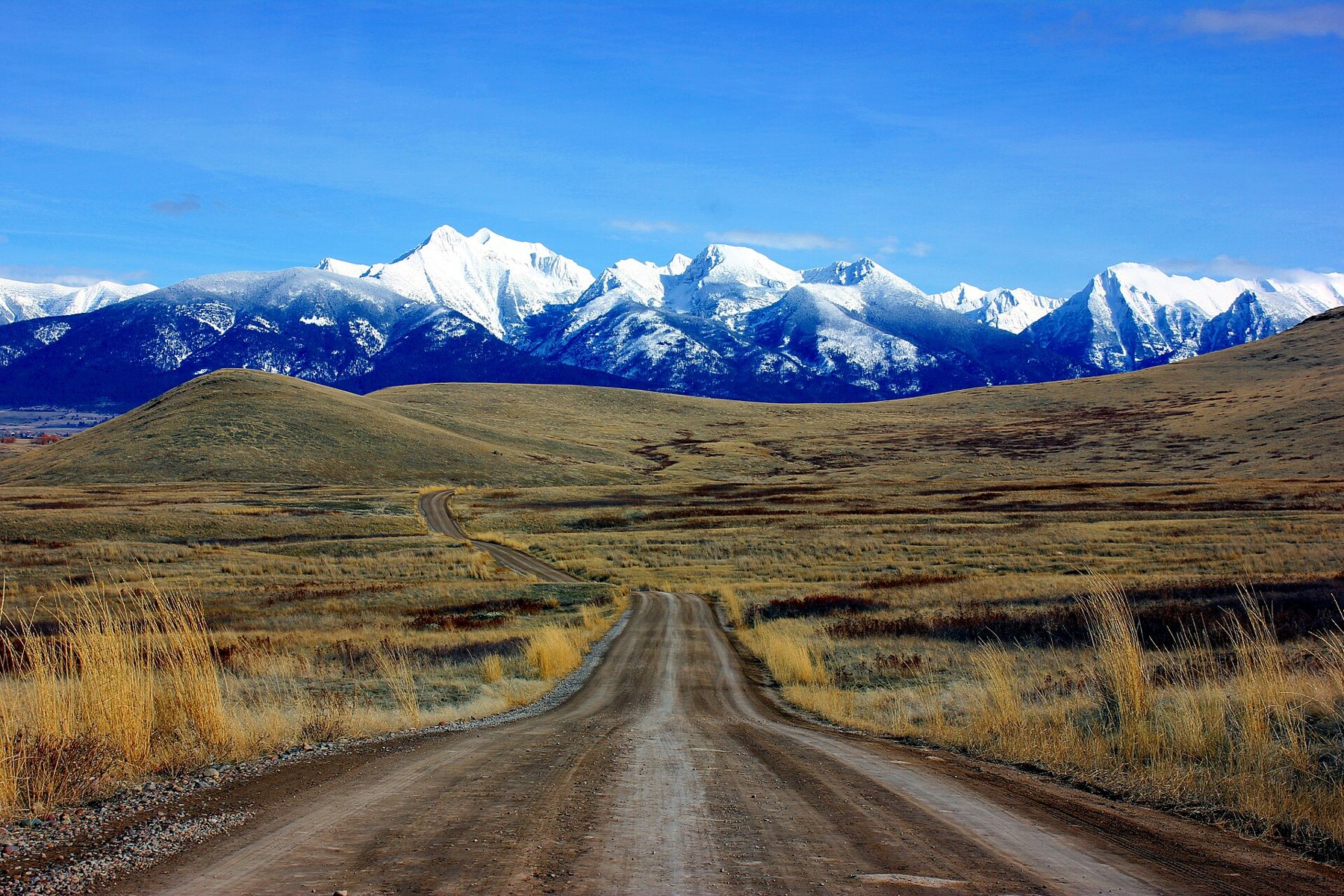
lens
Jaix Chaix · CC BY-SA 2.0
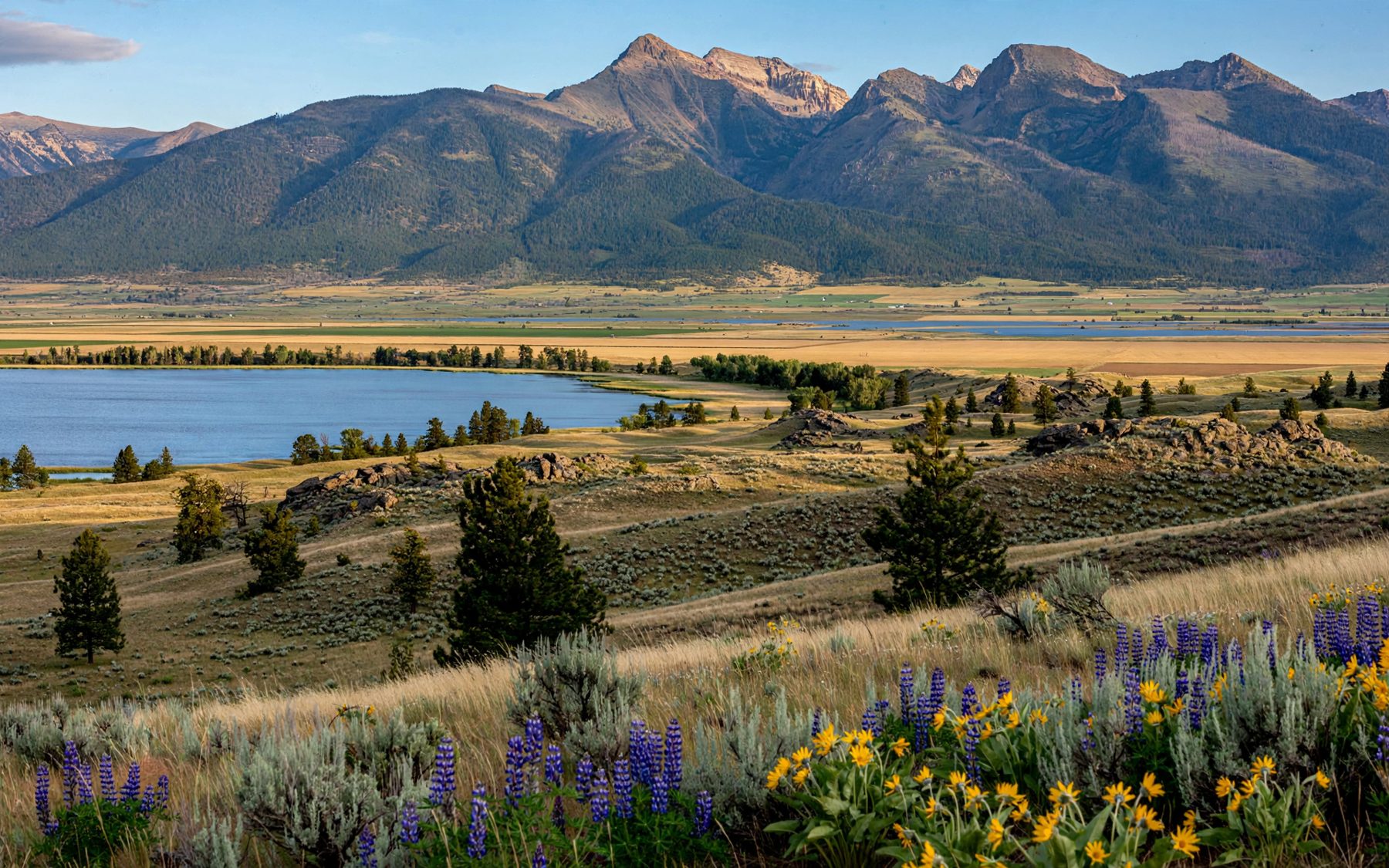
South of Flathead Lake, beyond the farms and potholes of the Mission Valley, a block of rounded, grassy hills rises from the valley floor. From a distance it looks like empty country. Drive into it and the grass is full of life: bison grazing on the slopes, pronghorn racing across the flats, elk moving along the timbered draws, and over it all, across the valley, the white wall of the Mission Mountains.
This is the Bison Range, a little under twenty thousand acres of native grassland and forest, now managed by the Confederated Salish and Kootenai Tribes. A day here is a drive and a lesson at once: in wildlife, in the shape of the land, and in the long history of the people who have lived in this valley.
Land returned
The Bison Range was created by the federal government in 1908 as a refuge for bison, at a time when the great herds of the plains had been all but wiped out. It was established on land within the Flathead Indian Reservation, and the Tribes did not agree to its taking. For more than a century it was run as a national wildlife refuge.
The Tribes worked for decades to have the land returned, and federal law finally restored it to them. Since 2022 the Confederated Salish and Kootenai Tribes have managed it as the CSKT Bison Range, bringing their own knowledge, history and language to how the land and the animals are cared for and how visitors learn about them. For the Salish, Pend d'Oreille and Kootenai peoples, the return of the range is part of a much longer relationship with the bison and with this valley.
Visiting is still open to the public, with fees, seasons and hours set by the Tribes. These change, so check the current details before you go, and start at the visitor centre near the entrance, where exhibits tell the story of the range and staff can tell you which roads are open.
The herd and its story
The bison here number in the hundreds, the figure rising and falling with the calves of each spring and the management of the range. In the second half of the nineteenth century, as bison were being slaughtered across the plains, a few young animals were brought across the mountains into this valley by Pend d'Oreille people. The herd that grew from them on the reservation became one of the largest surviving herds in the country, and animals descended from it helped to restock bison herds elsewhere. Seeing bison on these hills is, in a sense, seeing that story come home.
Bison are big, fast and unpredictable. A bull can weigh as much as a small car and outrun a horse over a short distance. They look placid while grazing, but a raised tail, a lowered head or pawing at the ground are signs to back off. In summer, the rut makes bulls more restless still.
Red Sleep Mountain Drive
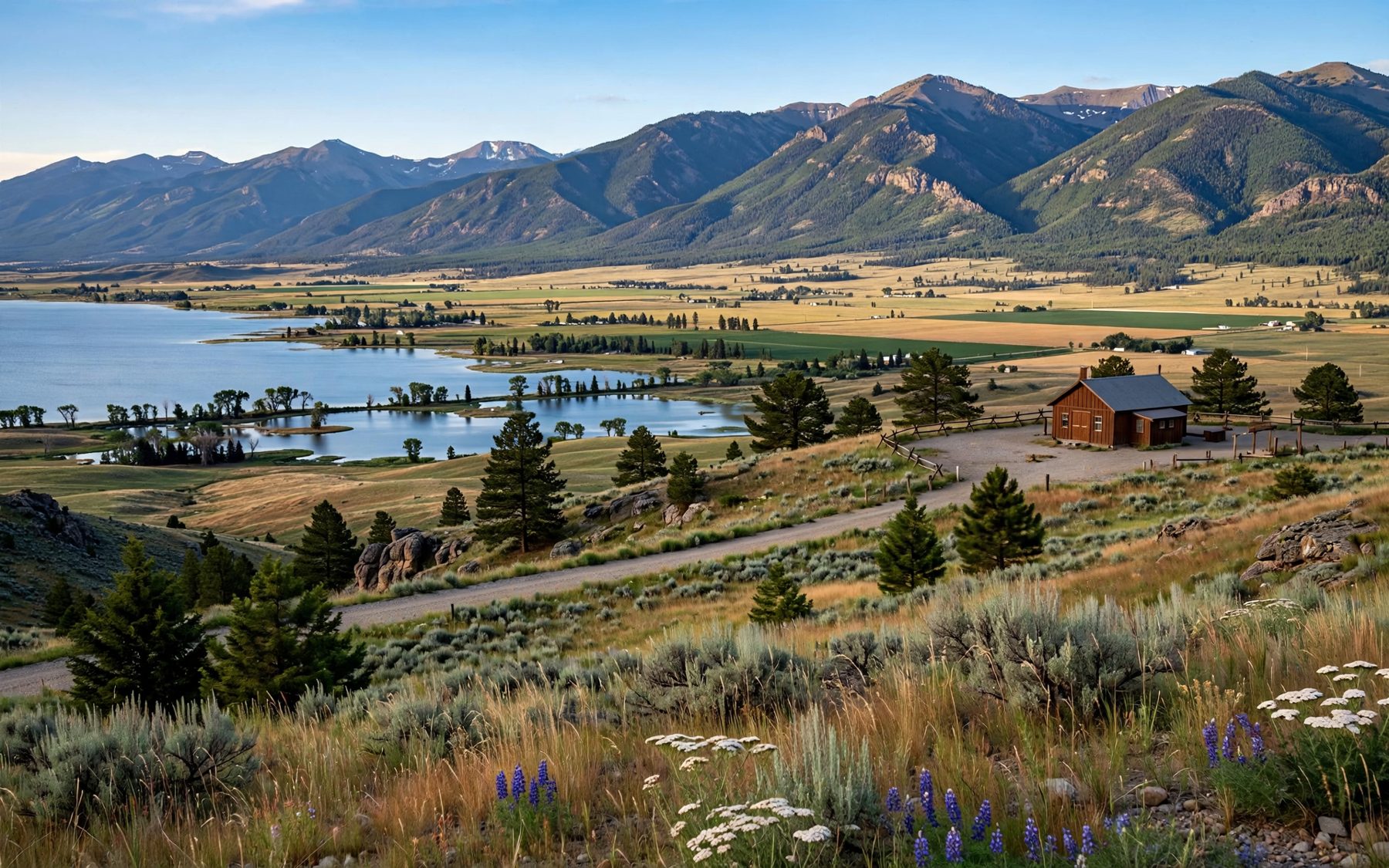
The great drive of the range is Red Sleep Mountain Drive, a one-way gravel road that loops up into the hills and back down, close to twenty miles long. It climbs steeply on narrow switchbacks to the high ridges, then winds down through grassland, open pine forest and the draws where the elk hide. Allow at least two hours, longer if you stop to watch animals, which you will. It is open only in the warmer months, and large vehicles and trailers are not allowed on it; check the current season and limits before you set off.
From the top the view takes in the whole Mission Valley, the potholes shining in the fields, the Flathead River winding below, and the Mission Mountains along the eastern sky. Shorter, gentler drives along the lower grasslands are open for a longer season and are the place to look for bison when the mountain road is closed. Spring brings green hills and new calves; autumn brings the elk rut and golden light.
3Elmo and DaytonElmo and Dayton: small bays on the west shore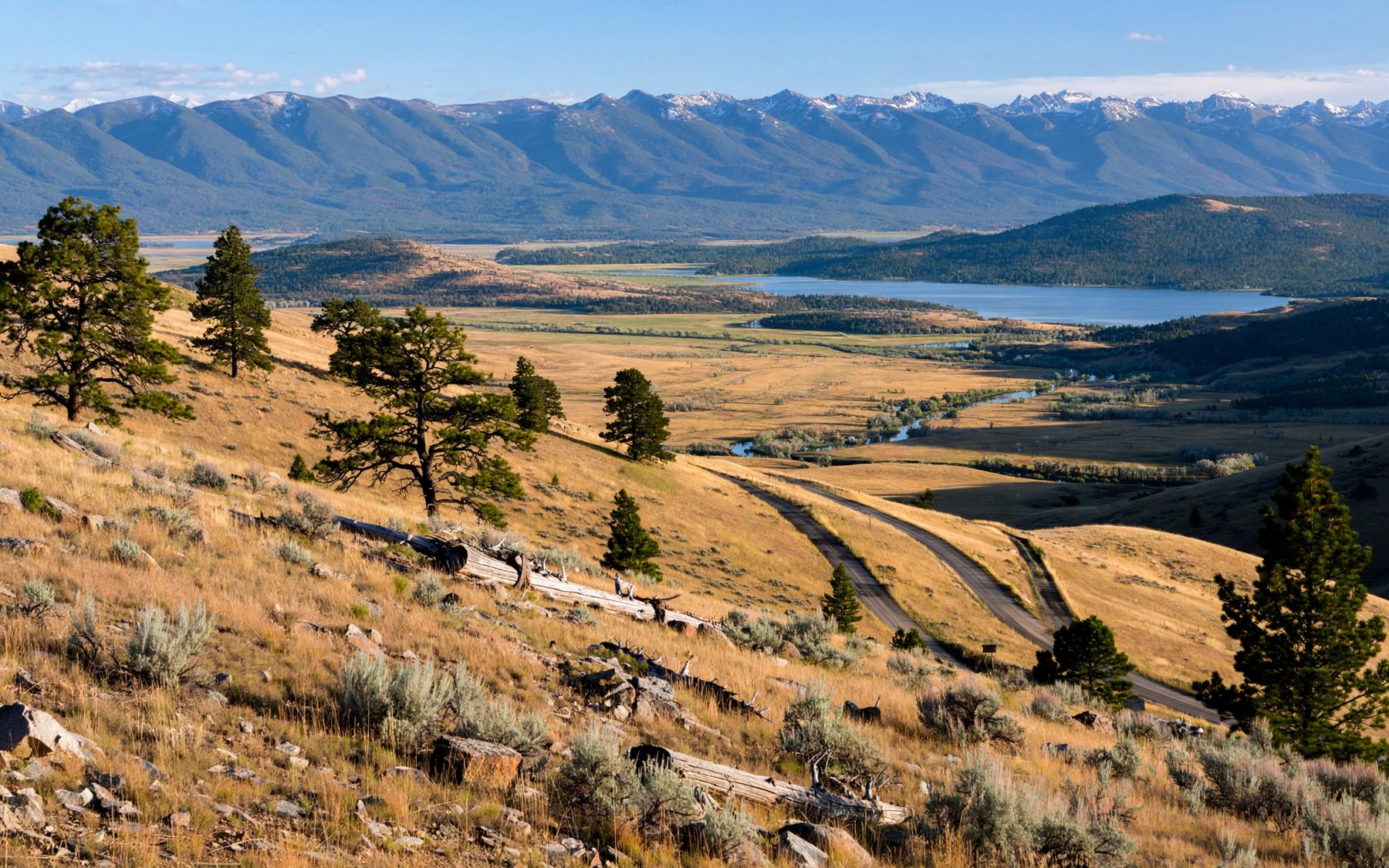
Staying in the car
On most of the range, the rule is simple: stay in or right beside your vehicle. You are driving through the home of large wild animals, and a car makes a good blind. Animals that ignore a slow-moving car often run or charge at a person on foot.
- Stay in your vehicle except at the places marked for walking or stopping.
- Keep your distance. Use binoculars and long lenses rather than getting closer.
- Pull over fully to watch, so others can pass; never stop on a blind bend.
- Keep pets in the car.
- Drive slowly. Animals cross the roads constantly, often with young following.
A few short trails are open on foot where the Tribes allow it; read the signs and stay on them. Rattlesnakes live on the warm slopes, and the sun is strong on the open grass.
Animals that ignore a slow-moving car often run or charge at a person on foot.
Pronghorn, elk and the rest
The bison are the headline, but the range is rich in other wildlife. Pronghorn, the fastest land animals in North America, graze the lower grasslands and can be seen racing along the fence lines. Elk spend much of the summer in the timbered draws and come out at dawn and dusk; in autumn the bulls bugle across the hills. Bighorn sheep live on the steeper slopes, and mule deer and white-tailed deer are common. Black bears, coyotes and badgers are here too.
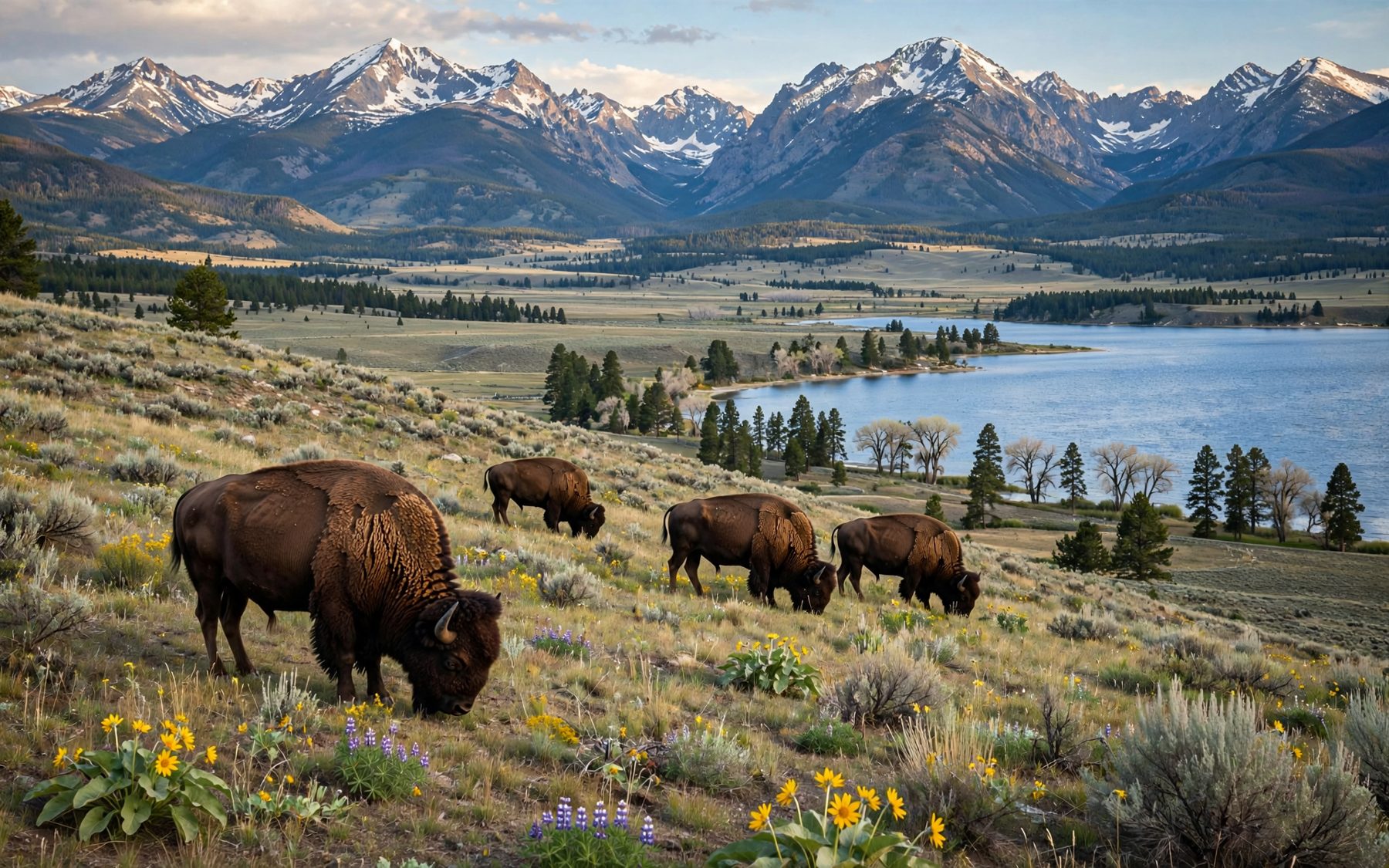
Birds are a pleasure in their own right: meadowlarks singing from the fence posts, golden eagles and hawks over the ridges, bluebirds in the open pine. In spring the hills flower with yellow balsamroot and the pink of bitterroot, the plant that gave the Bitterroot Valley to the south its name.
A day in the Mission Valley
The range makes a natural day south from the lake. Leave Polson early and drive down US 93 through the Mission Valley, with the mountains growing on your left. Spend the morning on the range, when the animals are most active and the light is soft. In the afternoon, head back north by way of the old mission church and the potholes of St. Ignatius and Ninepipe, where the birds and the mountain view fill the rest of the day.
Back at the lake, an evening on the Polson waterfront or a visit to the dam the Tribes own on the Flathead River rounds out a day spent on the reservation. The bighorn sheep and open prairie of Wild Horse Island make an interesting comparison another day: a different kind of refuge for some of the same animals, out on the lake.