Paddling the west shore from Big Arm
Big Arm's long pebble bay is the west shore's best launch for small boats. Paddle early, hug the shore, and respect the wind that builds across the open lake by afternoon.
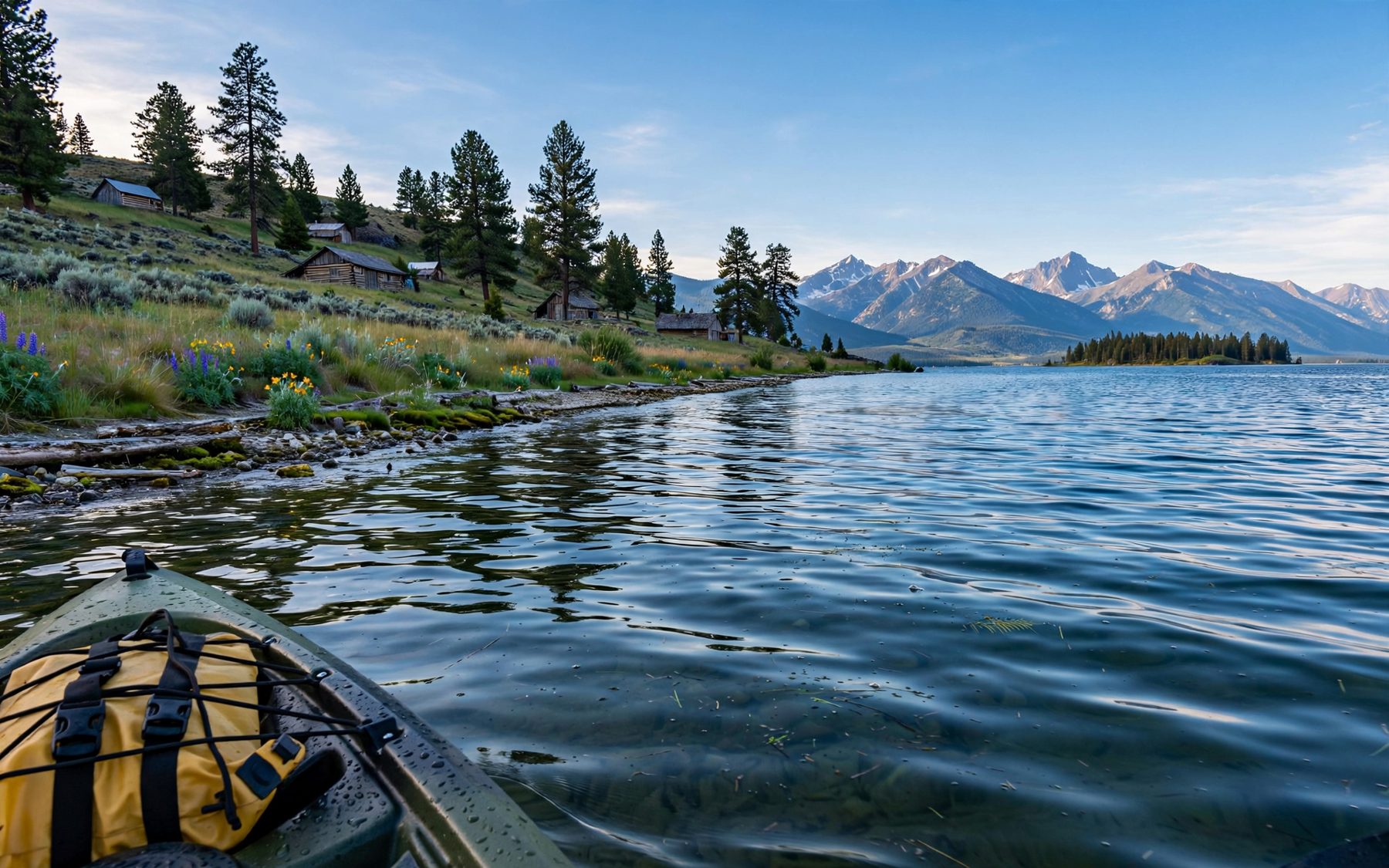
Big Arm is a wide bay on the west shore of Flathead Lake, a short drive north of Polson on US 93. Its shore is a long curve of rounded pebbles, its water is clear enough to count stones in at a paddle's depth, and Wild Horse Island sits just offshore like an invitation. For anyone with a kayak, canoe or paddleboard, it is the natural place to start on this side of the lake.
It is also a place that asks for some respect. Flathead Lake is big, deep and cold, and the west shore faces long stretches of open water where the wind has room to build. Paddled well, Big Arm gives you some of the finest small-boat water in Montana. Paddled carelessly, it can turn on you within half an hour.
The bay and the beach
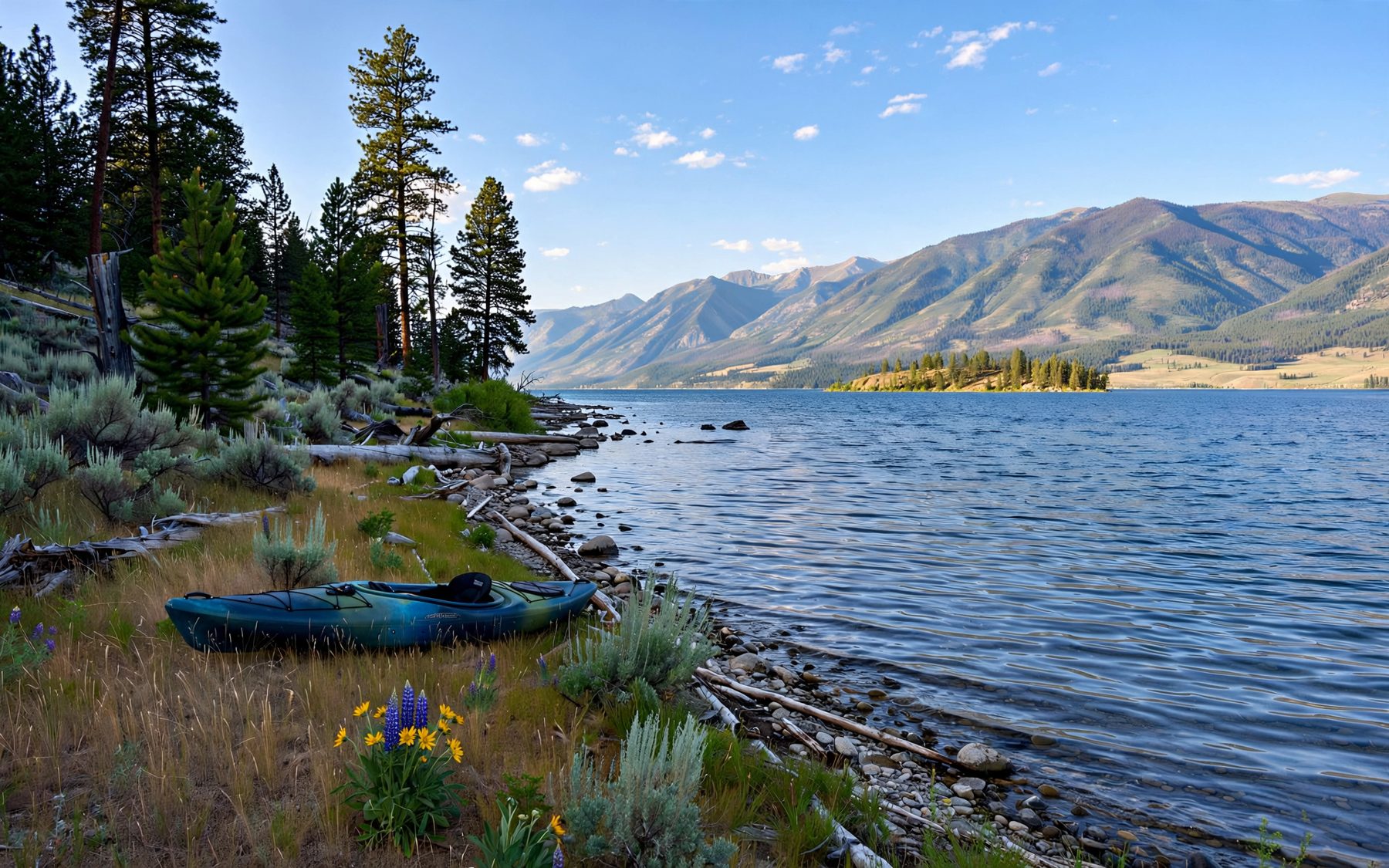
The Big Arm unit of Flathead Lake State Park sits on the bay, with a boat ramp, a campground set back in the pines and a long beach of smooth stones. It is the easiest public launch on this part of the shore: you can carry a light boat straight from the parking area to the water and push off from the pebbles. State park fees and seasons can change, so check the current details before you go.
The bay itself is fairly sheltered from some directions, and on a calm morning the inside of it is a gentle place for a first paddle, for children in a canoe or for someone finding their balance on a board. The beach shelves off gradually near shore before the water deepens, and the stones on the bottom glow red, green and grey in the sun.
The communities of Big Arm, Elmo and Dayton lie along this shore within the Flathead Indian Reservation. Using the state park needs no tribal permit, but fishing in the southern half of the lake, or using tribal lands beyond the park, generally does. Check the current rules of the Confederated Salish and Kootenai Tribes if your plans go beyond a paddle.
Wind, waves and the clock
The single most important thing to know about paddling here is the daily rhythm of the wind. On many summer days the lake is calm or nearly so at dawn. As the land warms, a breeze builds, and by late morning or early afternoon it can be blowing hard down or across the lake. The waves that follow are short, steep and close together, quite different from the long swells of the sea, and they can fill an open canoe or tip a paddleboard with little warning.
- Go early. Plan to be on the water soon after sunrise and back on the beach by late morning.
- Watch upwind. Dark ruffled lines spreading across the water towards you are wind on the way.
- Check the forecast. Thunderstorms in summer can bring sudden, violent gusts.
- Stay close to shore unless you are confident, equipped and the day is settled.
If the wind comes up while you are out, head for the nearest shore rather than the furthest. You can always walk the boat back along the beach or wait for the lake to calm in the evening.
2Big ArmWild Horse Island: bighorn sheep and a swimRoutes from Big Arm
The simplest paddle follows the shore of the bay itself, out along one side and back. You get the stones, the pines and the views across to the Mission Mountains without committing to open water, and you can turn around whenever the breeze stirs.
Stronger paddlers look across at Wild Horse Island. The crossing is a mile or more of open lake, which takes a fit paddler perhaps half an hour or so each way in calm water and a great deal longer in a headwind. It is a crossing to make only in settled weather, early in the day, with a clear plan for the return. The day-use state park on the island has landing bays, prairie walks and bighorn sheep, and it rewards the effort.
North along the shore, the coast towards Elmo and the bays around Dayton is a longer outing with more exposure. Much of that shoreline is private, so plan your stops for public land and do not land on private beaches or docks.
Cold water, every month
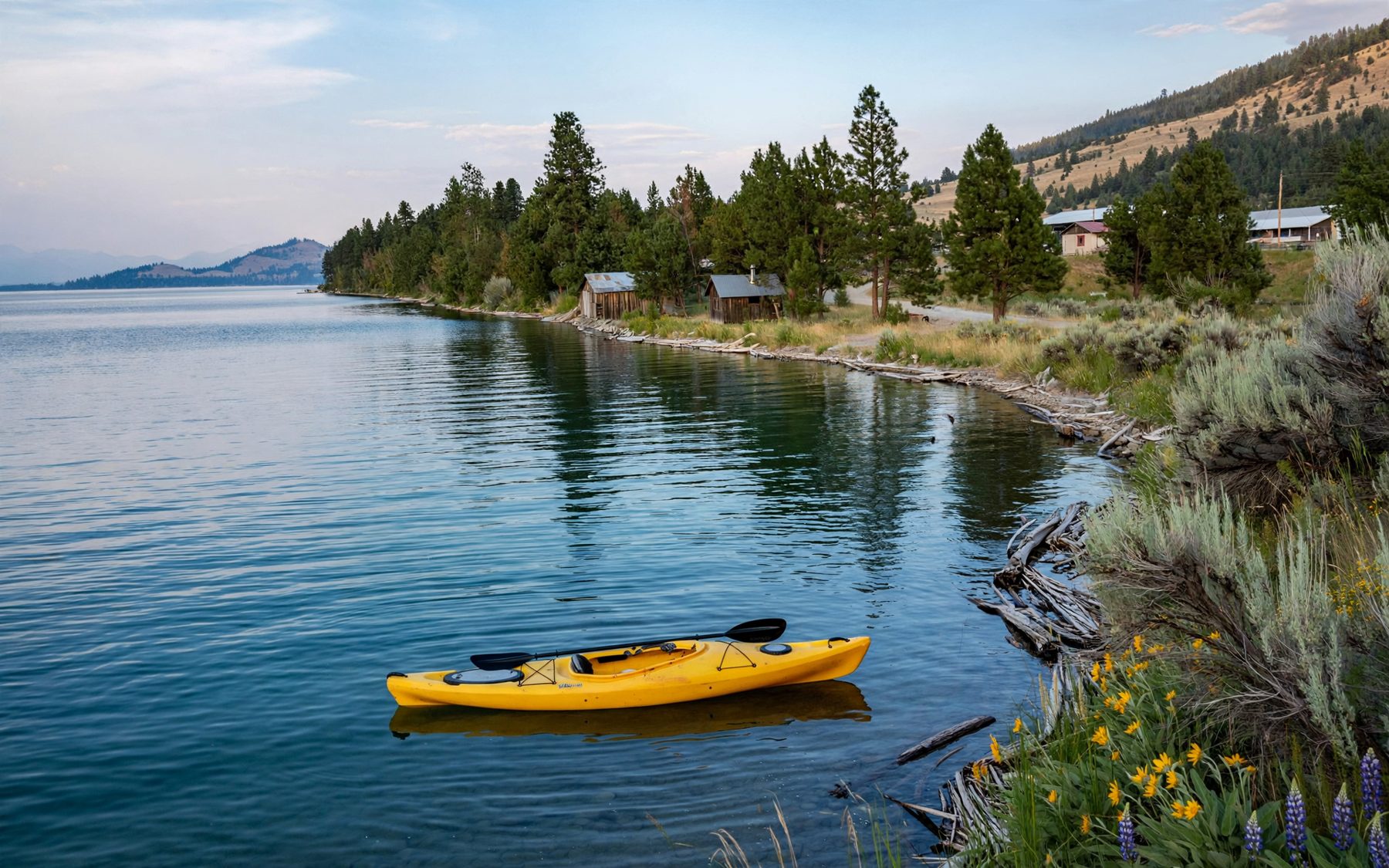
Flathead Lake is fed by snowmelt and is very deep, and even at the height of summer its water is cold. The surface layer in a calm bay may feel pleasant on a hot afternoon, but a fall into open water away from shore is another matter: cold shock can take your breath and your strength within minutes.
- Wear your life jacket, fastened, the whole time you are on the water, not tucked under a seat.
- Dress for a swim, not for the air temperature. Quick-drying layers and a spare set of dry clothes in a dry bag make a difference.
- Paddle with someone else where you can, and tell someone ashore your plan and your return time.
- Carry a whistle and keep a phone in a waterproof case, but do not rely on the phone.
- Practise getting back onto a board or into a kayak in shallow water before you need to do it for real.
Inspections and keeping the lake clean
Flathead Lake is one of the cleanest large lakes in the country, and invasive zebra and quagga mussels, which have spread through many western waters, would do it great harm. Montana runs aquatic invasive species inspection stations on the roads into the state and around the region, and stopping at any open station is required for watercraft, including non-motorised boats in many cases. Rules on which craft must be inspected, and where, are reviewed regularly, so check the current requirements before your trip. The story on the water of Flathead Lake explains what is at stake.
Whatever the rules say on the day, the habit is simple: clean any plants or mud off your boat and gear, drain every compartment, and let everything dry fully between waters.
The best of the season
July and August bring the warmest weather and the most people on the beach. Late June has long evenings and fresh green hills, though the water is colder. Early September is often the sweetest time of all: settled weather, quieter shores and the first yellow in the cottonwoods. Whatever the month, the rule holds: get out early, come in when the wind arrives, and leave the beach as clean as the water.