Lake McDonald's coloured stones, before the crowds
Glacier's biggest lake lies just inside the west gate. Come early, when the water is glass, the stones underfoot glow red and green, and the mountains stand twice over.
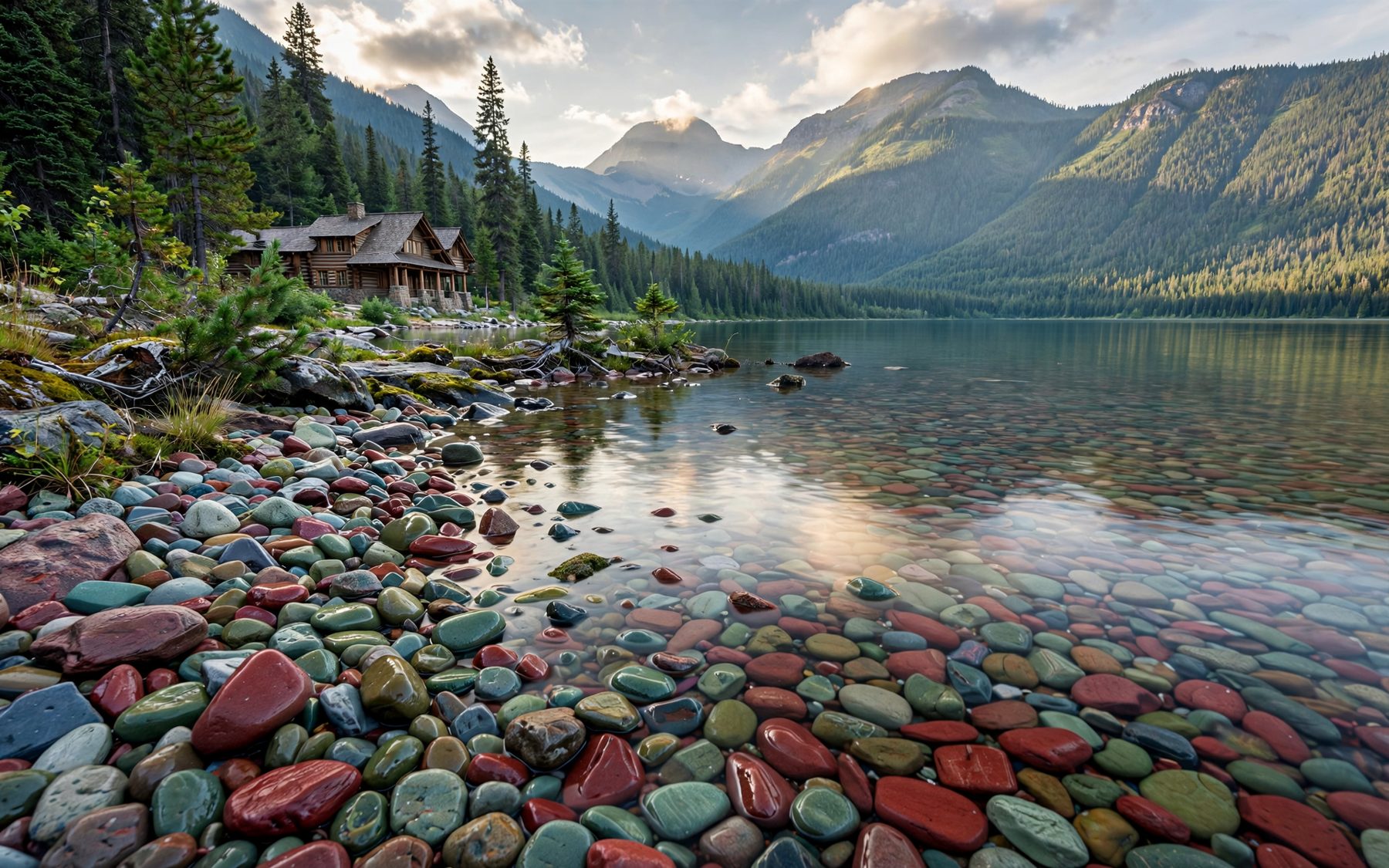
Two hours north of Flathead Lake, past Kalispell and Columbia Falls and up the Middle Fork of the Flathead River, US 2 reaches West Glacier and the west entrance of Glacier National Park. A few minutes inside the gate the forest opens and Lake McDonald appears: ten miles of deep, cold, astonishingly clear water filling a valley carved by ice, with the peaks of the park rising beyond its far end.
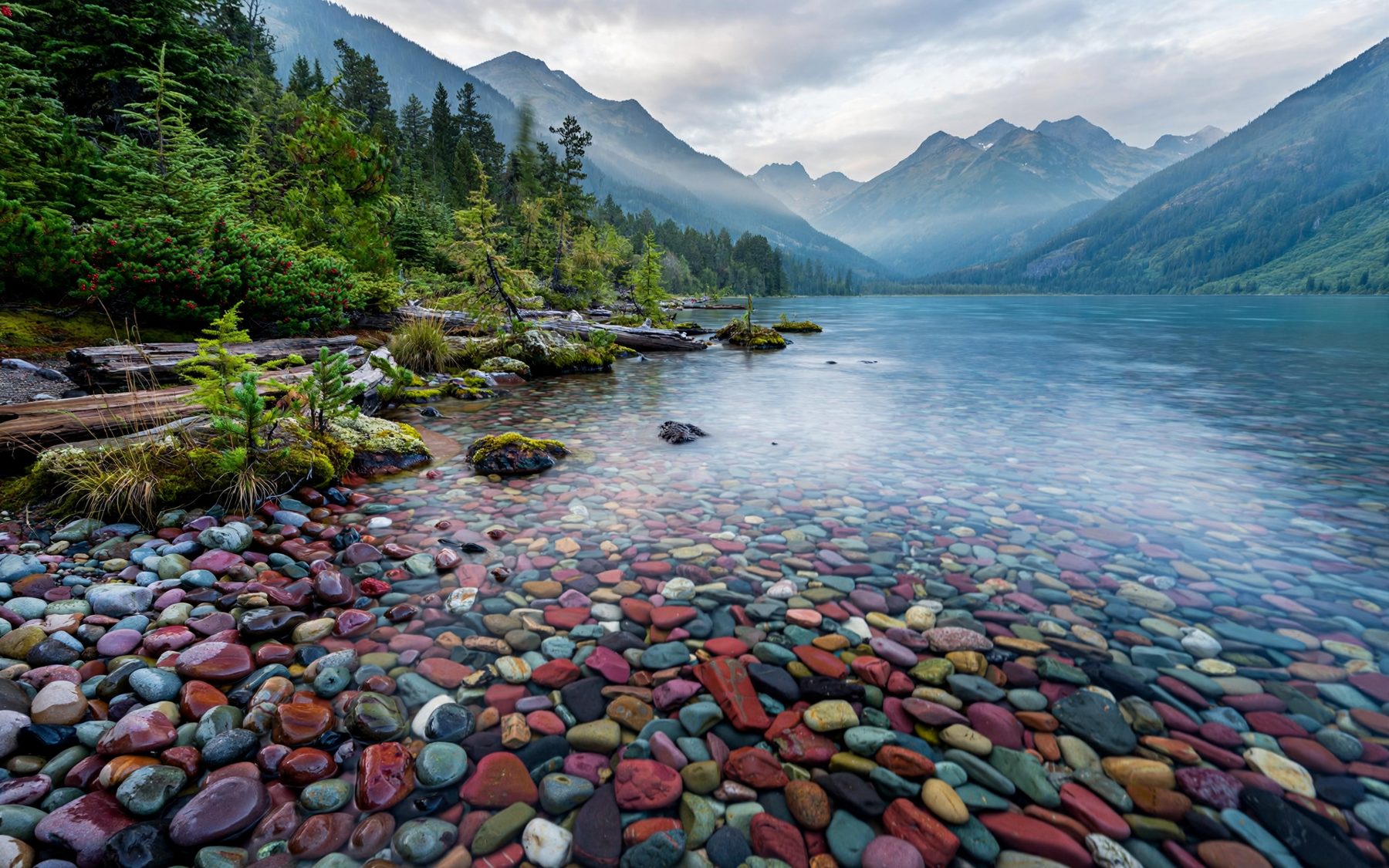
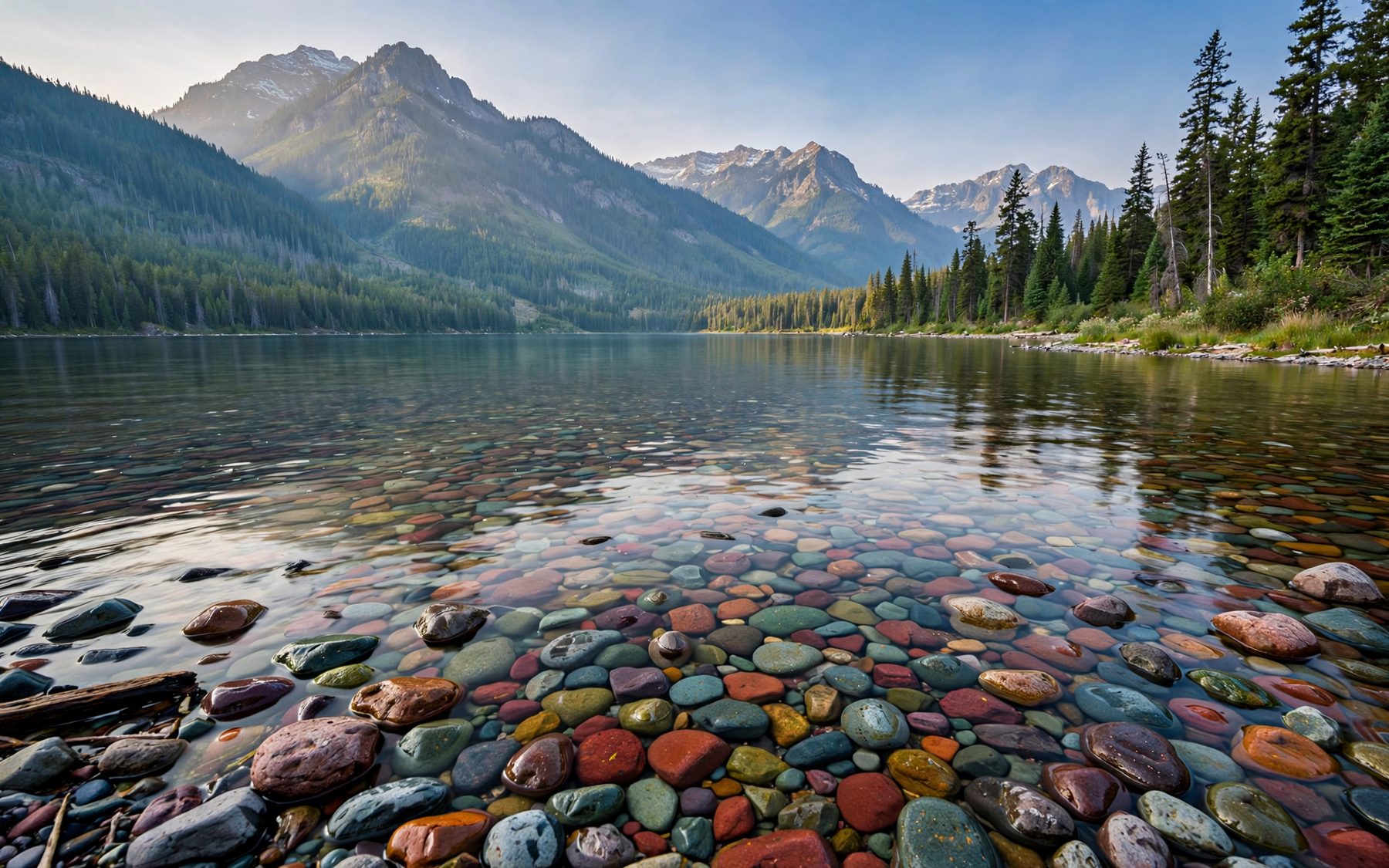
It is the largest lake in the park and, for many people, the first sight of Glacier. It is also one of the busiest places in it by midday in summer. Come early instead. At sunrise the lake is often perfectly still, the mountains stand mirrored in the water, and the famous coloured stones along the shore glow under a few inches of water as if lit from below.
Through the west gate
West Glacier is a small gateway community on the Middle Fork, with the railway passing through and the park entrance just beyond the river bridge. You need a park pass to enter, and in recent summers the park has also used a timed entry or vehicle reservation system for some roads and entrances during the busiest months. The details change from year to year, sometimes from month to month, so check the current rules well before your trip. Entering very early in the morning has sometimes been a way around the busiest hours, but do not count on it without checking.
Past the entrance station, the road forks. One branch leads to Apgar at the foot of the lake; the other becomes the Going-to-the-Sun Road, which follows the south-east shore of Lake McDonald and then climbs on into the heart of the park. For a lake day, Apgar is where you want to be.
- Arrive early: parking at Apgar and along the lake fills by mid-morning in July and August.
- Fuel and supplies: fill up outside the park; services inside are limited and seasonal.
- Phones: coverage is patchy. Download maps before you arrive.
Apgar and its beach
Apgar is a small cluster of buildings at the south-west end of the lake, with a visitor centre, a campground, picnic areas and a long shoreline of pebbles. The visitor centre is the place to ask about current conditions, trail closures, bear activity and the entry rules for the day. The beach in front of the village is where most people first meet the lake, and with good reason. It looks straight up the length of the water towards the high peaks, and in the early morning the view is calm and wide.
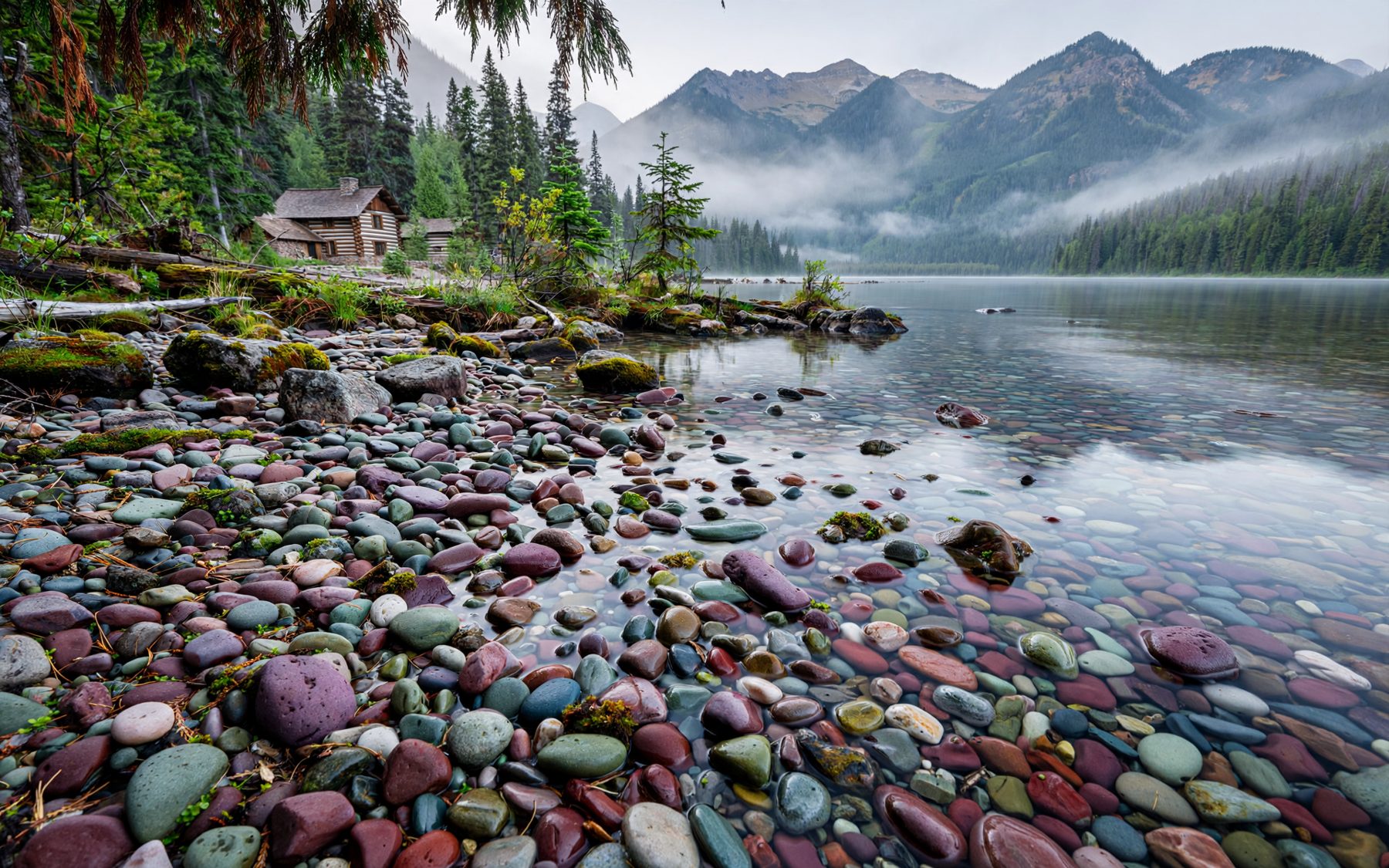
From Apgar you can walk along the shore in either direction, or follow McDonald Creek where it leaves the lake below the village. The area around Apgar also has short trails into the forest. Some of the surrounding slopes still show the marks of past wildfires, with silver snags standing over a new growth of young trees and fireweed; it is part of the natural cycle of these forests.
Red, green and blue: the stones
The stones that pave the shore and the shallows of Lake McDonald are the reason so many people kneel at the water's edge. They come in deep red, maroon, green, blue-grey and cream, rounded and smoothed by ice and water. Seen through the clear lake on a calm, sunny morning, the colours are vivid.
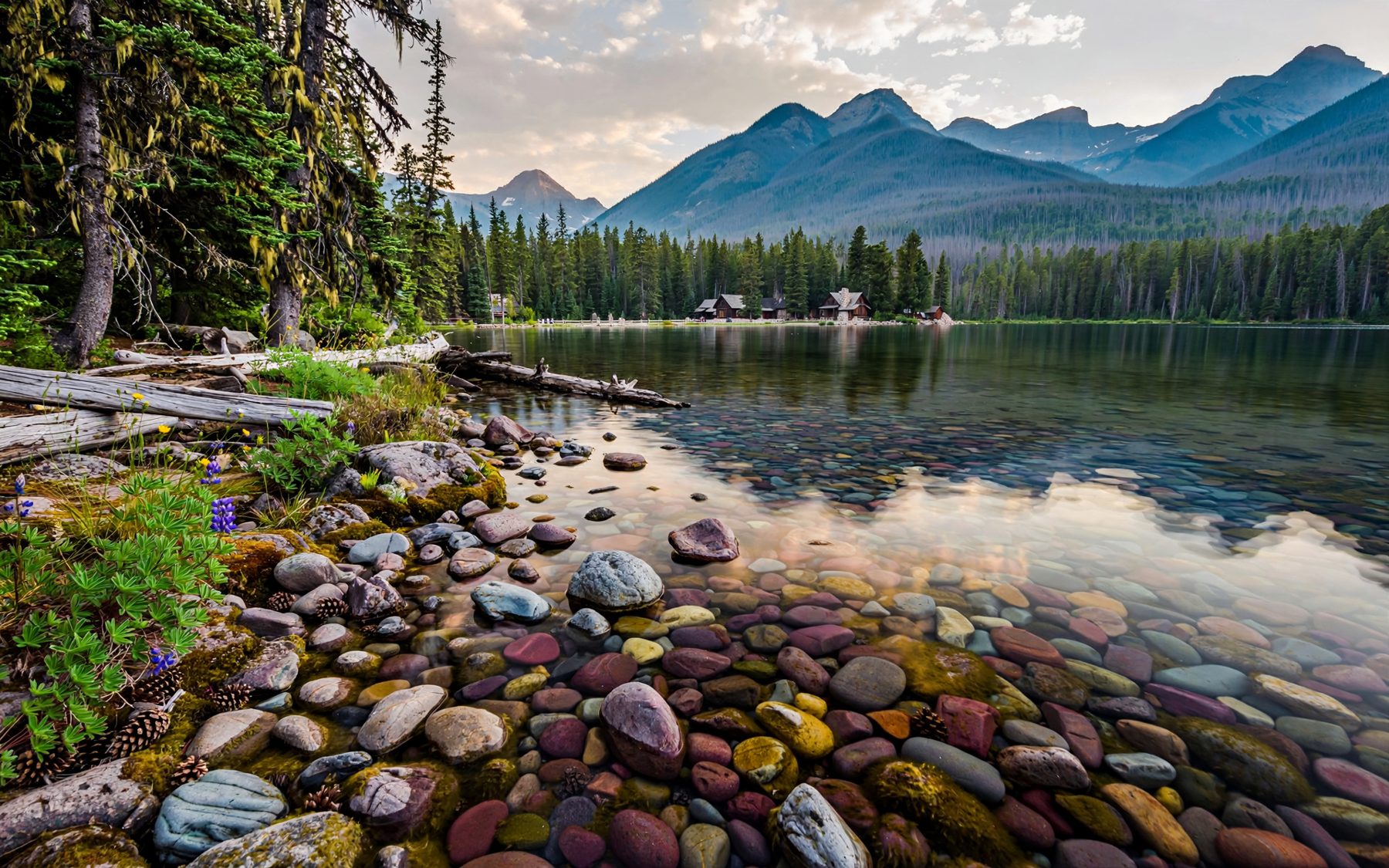
Most of them are argillite, a hard rock made from fine mud laid down in ancient shallow seas well over a billion years ago, long before there were any mountains here. The colours come from iron in the rock. Where the mud was exposed to air and the iron oxidised, the rock turned red and maroon; where it stayed under water with little oxygen, the iron stayed in a different form and the rock turned green. Glaciers later carved the valley, ground the rock into pebbles and left them along the lake.
Seen through the clear lake on a calm, sunny morning, the colours are vivid.
One rule matters here: do not take any stones with you. Collecting rocks is prohibited in the national park, and with millions of visitors, even a few pebbles each would strip the shore. Photograph them, hold them, put them back.
↑Glacier's west gateTrail of the Cedars and the climb to Avalanche LakeThe water and the morning
Lake McDonald is fed by snowmelt and is very deep, and its water stays cold through the whole summer. The low level of nutrients that makes it so clear also means it supports little plankton, which is one reason you can see the stones so far down. Wading on a hot afternoon is a pleasure; swimming is brief and bracing even in August, and cold water can sap your strength quickly. Stay close to shore.
Calm is most likely at dawn and in the evening. By late morning on many summer days, a breeze comes up the valley, ruffling the surface and erasing the reflections. If you want the famous mirror, be on the beach by sunrise and give yourself an hour.
Small boats, kayaks and paddleboards are popular on the lake, and the park requires them to be inspected for aquatic invasive species before launching; rules on which craft need inspection and where the stations are change, so check before you go. Motorboats are subject to their own restrictions. Wind can build quickly on the open water, so stay near the shore and come in when it picks up.
Montana's own invasive species checks apply on the way, too; the guide to the water of Flathead Lake explains why the region takes them so seriously.
Bears and the forest beyond
Glacier is home to both grizzly and black bears, and they live around Lake McDonald as they do across the park. Carry bear spray whenever you leave the car, keep it on your belt rather than in your pack, and know how to use it before you need to. Make noise on the trails, especially in thick brush and near running water. Store food properly at picnic areas and in camp; the park's rules on food storage are strict and enforced.
At the far end of the lake, the road follows McDonald Creek into an old forest of western red cedar and hemlock, where the Trail of the Cedars and the climb to Avalanche Lake begin. It makes a natural second half to a day that starts on the shore at Apgar. Parking there also fills early in summer.
Shaping your day
A simple plan works best on the west side of Glacier, where so many people are trying to do the same things in the same hours.
- Leave Flathead Lake before dawn and reach West Glacier early, with your pass and any required reservation sorted out in advance.
- Go straight to the Apgar shore for the morning calm and the stones.
- Walk a stretch of the shore or the creek, then drive along the lake to the cedar forest at its head.
- Picnic by the water in the afternoon, and head home through the valley in the evening.
Late June and July bring long days, green forests and snow still on the high peaks. August is warm and busy, sometimes hazy with wildfire smoke. September is quieter and cooler, and by October the larches on the slopes turn gold. Whenever you come, the first hour of the day on Lake McDonald is the one worth getting up for. After that, drive back south to the Polson waterfront or the north shore at Somers for evening light on a very different lake.